Monday, July 31, 2006

notley: sonnets and phoebe light

there are so many other things to say about notley's wonderful sonnet sequence, but i feel i must move on or will never get anywhere with this projected read-thru of all her books in order. so i will pick up on one theme i teased out of the first two sonnets in 165 meeting house lane, namely the speaker's unease with the state of things in which she finds herself. i suggested that she is critical of male domination in the literary and sexual domains, in which women's only recourse is to "ingratiate & divert / Upstairs stay quiet inviolate." to find a response to this situation is i think in part the goal of these sonnets. poem #3 begins:

The new way through town, snow still clean, warmer
I walk erect loose arms & red shawl scarf
New antique shops I'll never enter
Plenty solid houses no people: TV's
Who wants an old velvet dress good brown
50 postcards of old little girls & such
Anyway? I do, prefer to live in this town
On present means means no work as such [...]
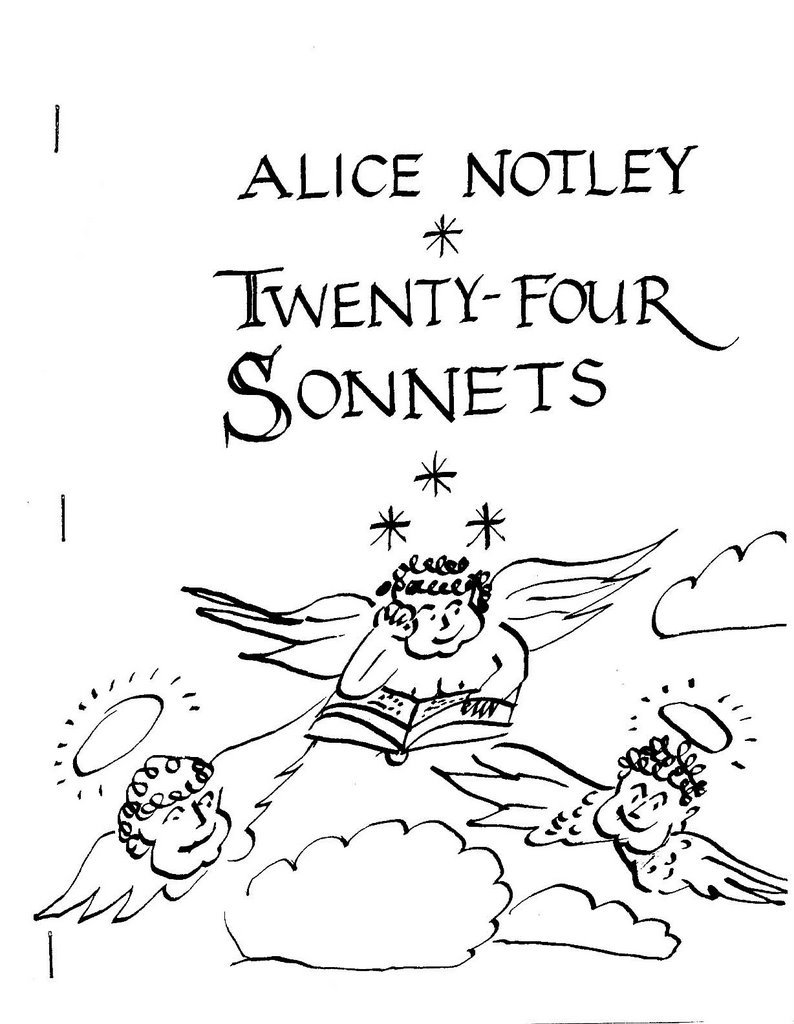
alice notley, cover of 165 meeting house lanethe chance to stay with friends in the hamptons might offer a break, a fresh perspective; instead, it's the same old commodity culture that the speaker realizes is empty and hollow but is nevertheless drawn to all the same. in a culture that does not value poetic labor, the speaker wears this lack of means as a badge of honor: "I'll take to my own device," she says in the last two lines of the poem, "Being part in part outside the premises." That is, she knows she is complicit in a system that she tries to resists; she knows she does not "belong" in the hamptons according to her class status but will remain there defiantly. "This house came gratuitously," she writes in sonnet #4, "Christmas new friends their / Summer house / Jealousy keeps / To stun from where / To escape I speak" -- again, she is both complicit and resistant, willing to accept the invite of a free place to stay but also jealous of the means by which the friends afford such a place. "To stun from where / To escape I speak" -- remarkable lines that might serve as something of a motto for the sequence as a whole. notley wants to stun us into a new consciousness of our surroundings and their contradictions: she speaks from this place in order to escape to an alternative. (again, the flight/chase motif from earlier in the sequence).

theses sonnets are not always filled with such confidence, and often the speaker reflects self-doubts, flagging energies for the battle, or simply the need to be comforted by the other. "Sometimes I think I just do / As in 'You'll do'" she writes in sonnet #12, while sonnet #11 begins "Sometimes you asleep / I go there to be with you / Love's my lazy streak." Sonnet #16 is for me something like the emotional center or pivot of the poem, so i'll offer it here in full:

Hour less close to feeling bad & restless
Spent bath food & drink while you've been sleeping
Now reading I hear you walking past my door shut
& back to bed, no words none needed, how can
I think of what's not done when there's an easy doing
Always now? Between us. As we're going each
If we reach there are words too, & walks & books to-
Gether, tether we pull tighter, after
It turned surprising into the prize for staying
At it, see there are some sometimes, prizes, that aren't
Lost when found out, & it isn't even like winning
Which is what gets to be being over fast, it's like
Being, & spreading, & air we're breathing


Here the speaker finds comfort in the ease of being together and in the present moment, as if the concerns with what lies ahead can be deferred while the present is enjoyed: "how can / I think of what's not done when there's an easy doing / Always now?" there is a collaboration in and with language here -- "If we reach there are words" -- and persistence pays off, "the prize for staying / At it." the speaker reassures the other, "see there are some sometimes, prizes,... & it isn't even like winning / Which is what gets to be being over fast, it's like / Being, & spreading, & air we're breathing." that is, the payoff for persistence does not have the feeling of winning, of victory over something or someone: instead it's as easy and natural as being, coextensive as breathing.

the remaining 8 poems in 165 meeting house lane, however, do not maintain this sense of ease; the 24th and final poem picks up the motif of breathing from the 16th poem, but this time with an altogether different tone. "Pretty soon all I hear is breath / Not calm as it is one listening / For words to make languor into ease," the poem opens, but it concludes "Only completion's breath / It's calm, I'm less not" and we are returned to the state of unease that largely persists through this book.

*     *     *


alice notley, phoebe lighta 36-page saddle-stapled chapbook, phoebe light (big sky book, 1973) somehow feels lighter (or slighter) to me than the previous 24-page sonnet sequence -- perhaps in part because it is a collection of individual poems without the unifying themes and structure of the sonnet sequence, but perhaps also because of her additional 56-page collection (incidentals in the day world) that came out the same year. given that one usually takes the publishing opportunities that are made available to you, i'm nevertheless left wondering what kept phoebe light and incidentals from being combined into a larger collection -- or perhaps more importantly, what keeps them distinct. from a quick glance they appear to have only a single poem in common: "dear dark continent," the second-to-last poem in phoebe light and the second in incidentals.


Dear Dark Continent:


The quickening of
the palpable coffin
fear so then the frantic
doing of everything experience is thought of

but I've ostensibly chosen
my, a, family

so early! so early! (as is done always
as it would seem always) I'm a two
now three irrevocably
I'm wife I'm mother I'm
myself and him and I'm myself and him and him

But isn't it only I in the real
whole long universe? Alone to be
in the whole long universe?

But I and this he (and he) makes ghosts of
I and all the hes there would be, won't be

because by now I am he, we are I, I am we.

We're not the completion of myself.

Not the completion of myself, but myself!
through the whole long universe.


this is a stunning account of the responsibilities of parenting and especially motherhood. i'm reminded of ted berrigan's famous declaration "I'm only pronouns, and I am all of them" (from the poem "red shift") here some ten years earlier anticipated with a vengeance! i'm also reminded of "diving into the wreck" by adrienne rich: "I am she: I am he. [...] We are, I am, you are / by cowardice or courage / the one who find our way / back to this scene" and how fraught pronouns can be -- in notley's case, utterly fraught with the complications that motherhood entails. recall how "quickening" occurred in the opening sonnet of 165 meeting house lane with a sense of renewal; here it's associate with death and ghosts, since the speaker recognizes that with motherhood it is no longer "only I in the real / whole long universe," that "I and this he (and he) makes ghosts of / I," essentially killing of the "only I" and replacing it with an "I am we."

the closest phoebe light comes to maintaining this kind of intense emotional weight is in the confessional mode of the poem "to my father," where we read

The centre of me
is always & eternally
a terrible pain--
a curious wild pain--a searching
beyond what the world contains, something
transfigured & infinitie--I don't find it,
I don't think it is to be found.
which further nuances our understanding of the flight/escape motif first sounded in the sonnets. as this poem concludes, it is tied to both the ghost motif and the idea of the poet's work, also from earlier: that "centre of me" that is "a curious wild pain,"...
It's like passionate love for a ghost.
At times it fills me with rage,
at times with wild despair,
it's the source of gentleness & cruelty & work.
it's that insatiable desire for the beyond that both crushes and uplifts, that's the sustenance of human life.

there are plenty of other great poems in phoebe light -- a number of dream poems and list poems and "things to do" type poems that are characteristic of the new york school -- and perhaps it's a good thing that they are on the lighter side, since to keep up the emotional intensity of "to my father" and "dear dark continent" might very well be unbearable. there's also a quasi-autobiographical sort of prose poem called "the development of my mind and character," part of which again has a wonderful satire of traditional gender roles and expectations--
        I robe the bank, to have friends come from far countries. I clean the stove, the pilot burns, pure blue gas. When I was a good and bored little girl I was secretly afraid I would do all horrible things: stop going to church, fuck, be dope addict, be lesbian, commit suicide. I forgot to mention have baby out of wedlock and lose contact lenses. It never occurred to me certain things would become 3-D like a room with wondows and light and big boy firend. And the map the highways of the US. Nor are elaborate speeches and slick alacrity, yet.
--only to conclude "Then I became a lesbian, had a baby, killed myself, chatted much."

one thing i see new in this book is a kind of compressed syntax that one certainly sees in passages of the meeting house lane sonnets, but here extended over an entire poem like

FROZEN DANCE, SOUTHAMPTON


Cloud logic weeps a cloaked laugh
Moon-eyes make illusions on earth
Inanimate pinnacles backyard
Cultivate mirror regions farcical
Beyond grief
Foliate scowl
That rain should sleep
Passions' assignment the brain awaits
By streak space comes
Through mirth insight collision
The lunatic under the ice-swell
Waits rake burned, born reprobate
Clicking gestures ingown iron

that strikes me as some of notley's most challenging writing yet, and already in only her second book. and it's the kind of thing i recall seeing and feeling in those mid-1970s books of notley's i have already read.

but we are not quite there yet.

[previous] [next]

one book

tagged from jessica, sorry to be a spoil sport, but one book? my brain simply does not work in singularities. so instead i'll list five books that are currently on my mind...
  • alice notley, incidentals in the day world - next in my notley project, since i've now finished phoebe light and hope to be posting about that later today.
  • diane diprima, selected poems 1956-1975 - been dipping in and out of this one for quite a while, and again recently in anticipation that she may be reading in DC in the fall. it's a big but important and pretty neglected body of work near as i can tell...
  • david meltzer, david's copy: selected poems - interesting to compare with diprima, a near contemporary equally invested in mythopoesis and alternative knowledge systems. my first thought on flipping through this one was that it was good to have a tightly-edited selected meltzer in print after the liquidation of black sparrow; my second thought halfway through a closer read is that while there's some of meltzer's work that i really like (e.g. the second half of arrows, his early black sparrow selected), there's a fair bit that doesn't work for me. male mytho-erotopoesis of a certain vintage defaults to cliché for me.
and two from my wishlist:
  • stephen kinzer, overthrow: america's century of regime change from hawaii to iraq - robert sherrill calls this one "an infuriating recitation of our government's military bullying over the past 110 years -- a century of interventions around the world that resulted in the overthrow of 14 governments -- in Hawaii, Cuba, the Philippines, Puerto Rico, Vietnam, Guatemala, Nicaragua, Honduras, Panama, Chile, Iran, Grenada, Afghanistan, and ... Iraq." i know a little about some of these but nothing about others: a necessary primer in democracy-building, american style.
  • robert fisk, the great war for civilisation: the conquest of the middle east - not sure whether i could make it alltheway thru this 1100-page tome, but there's no one i'd rather read on the matter right now.

Friday, July 28, 2006

notley: sonnets

this is the first of what will be an ongoing series of posts, over the next six weeks or so, on the poetry of alice notley, book by book in chronological order. i've only come to notley's work within the past few years: i remember finding a remaindered copy of close to me & closer . . . (the language of heaven) and désamère at labyrinth books in NYC and buying it to give my friend jean since i knew she was a big notley fan. of course she already had a copy so i kept it for myself, reading it and finding it intriguing but rather disorienting or something. but it was perhaps chiefly through the recording of notley reading (MP3) "at night the states" that peter gizzi included in the exact change yearbook #1 (1995) CD and now available at pennsound that really opened my ears and eyes and brain.

i then began rummaging through the anthologies lying about at home for whatever poems of hers i could find but not finding much more than scattered poems, tho i did find her early sonnet sequence in the all stars anthology that tom clark edited in 1972. at some point i picked up disobedience and read it straight through, thinking it the best long poem i'd read in a long while, perhaps ever. also somewhere around this time i heard notley read at the lannan poetry series at the folger library here in DC and was again blown away. next i got descent of alette and was not as compelled by the mythopoesis constructed there but still found it a remarkable work. then mysteries of small houses again blew me away, poem after poem, through which i could see the growth of the poet's mind as it were. i then happened upon songs for the unborn second baby (powell's online had a bunch for a good price) and, as i wrote earlier, found it a rather jarring experience, full of discontinuties and ruptures that i was unprepared to find in notley's work. then, just last month at tim's in london i read as much of his notley as possible, especially finding alice ordered me to be made a brilliant collection that started putting the pieces of her overall trajectory together for me.

essentially i've come to notley's work backwards, starting with the more recent penguin books and sort of ping-ponging back and forth through the earlier work. this is unfortunately all one can do when significant portions of a major poet's work are allowed to remain out of print. the talisman selected may have proven useful in keeping some work in print for a time, but the table of contents gave no indication of what poems were form what books. the forthcoming grave of light: new and selected poems, 1970-2005, due out from wesleyan this fall, should help matters considerably. but of course there's no substitute for the individual books themselves. so this is an attempt to start at the beginning and move forward to construct a trajectory of her work...

*     *     *


alice notley, cover of 165 meeting house lanenotley's first book, 165 meeting house lane, like many of the classic 8-1/2 x 11 side-stapled publications of the mimeo revolution, is presently rather difficult and costly to obtain. (this one from ted berrigan's "c" press, 1971; serendipity books has a copy currently fetching nearly $90.) indeed the book's final page tells us: "This single limited edition consists of 250 copies, mimeographed, with offset covers, front and back, drawn & printed by the poet Philip Whalen. There are also 4 copies hors commerce, lettered A, B, C, & D, which are cloth bound and contain each an original drawing, & a photograph of the poet." (wonder what one of those goes for!)

as i suggested earlier, a reasonable alternative text for these poems -- one that has the added bonus of including generous samplings of poetry by michael mcclure, clark coolidge, dick gallup, aram saroyan, ed dorn, ted berrigan, ron padgett, philip whalen, james schuyler, robert creeley and ed sanders (alice the lone woman in the crowd!) -- can be had from all stars (ed. tom clark, goliard/grossman 1972). in fact, there's something wonderful about notley's sonnets in all stars being followed by her husband ted berrigan's sequence winter in the country, very likely written at the same time and drawing of porter's southampton houseplace as notley's sonnets. indeed the same last page on the "c" press text that contains the publishing info also contains a bio that states notley resided, during "the Winter of 1970-71, at 165 Meeting House Lane, Southampton, Long Island, New York. This book, her first, was written there." hence of course the book's title. in fact, since the book bears the dedication "For Jimmy Schuyler | for Anne & Fairfield Porter | & for Tom Clark," my suspicion is that notley and berrigan were spending the winter months of 1970-71 with schuyler and the porters at the latter's southampton home.

one could also take a more recently written author's note, one she wrote for tim atkins' recent reprinting of a subsequent (1973) sonnet sequence, great interiors, wines and spirits of the world (from the notley issue of the chicago magazine out there) as an additional indication of the occasion for 165 meeting house lane: she describes this sequence as "heavily influenced by the later sonnets of Edwin Denby." certainly denby and berrigan himself were the chief practitioners of the sonnet sequence in the post-WWII, new american poetry tradition, and one could fruitfully compare notley's sonnets with these to discern the stylistic and thematic differences between these sonnets and notley's. but i'm more interested for the moment in taking notley's sequence on its own terms.

here is the first poem:

I dreamed of a clipper ship
Gold on blue THE CHASEY ALICE
Until he'd seen which Captain You said
He'd seen nothing. I woke bold
Chased you to get caught in the hold
Back to sleep 2 nightmares
Solid ones down not to be told
Woke not wanting to be in life
Wasn't, outside warmed
To my blood clean cold quickened
On the way to town for food and
Back for toy, though I was still
A little sulky & grim
So you fucked me back in.

wow! while this poem could be seen reiterating a typical new york school concern with the dailiness of routine experience, right away it sounds a number of concerns that recur throughout the sequence and make notley's work distinctive: dreams, as both aspirations and darker perturbations; flight, escape from or unease with one's present surroundings; and sleep/sex with the significant other as a refuge or sanctuary from these concerns -- or in this case, a rather stark and perhaps even coercive return to the real world. those last three lines are great not only for their frank and even coldly aggressive treatment of sex, but the words "a little sulky" have a wonderful childlike quality that makes the lines sound very coy and playful as well. i can't help thinking too that the alternation between the gutteral and hard "uk" sounds (sulky, fucked) and brighter "i" sounds (still, little, grim, in) contribute to these qualities.

a word here too on the remarkable quality of notley's syntax. since the poem describes a dream experience it would be reasonable to expect the poem to have a fragmentary, notational quality: we tend to remember dreams in bits and pieces, and anyone who has kept a dream journal or otherwise transcribed his or her dreams in writing can attest to this. freud even talked about how dreams as we remember them are subject to the condensation and displacement of the stuff of which our dreams are made. you can see this taking place in the very syntax of notley's poem. lines 3-5, for example -- "Until he'd seen which Captain You said / He'd seen nothing" -- are quite nearly impossible to parse: we don't know who "he" is (the captain? you?) and we don't know what "which" refers to (the ship? the dream? the captain?), so all we can say really is that the speaker/dreamer is experiencing a contradiction regarding the facts of the dream. and again if we think about it, this is not so uncommon: things in dreams often seem contradictory, and notley's syntax is literally making the reader re-experience those contradictions.

there are also a lot of omissions or ellipses in notley's syntax. notice how there are only two sentences in this poem -- actually one complete sentence and one long incomplete run-on sentence that begins "I woke bold" and technically never ends. the "I" who "woke bold" carries through as the implied subject of a string of subsequent actions in the poem that are also compressed or have omissions: "chased you," "[went] back to sleep," "woke," "wasn't [in life]," and so on. there is a notational quality to this syntax, as if the words are jotted down as they come to the speaker in a rush. the brain does not always think in correct grammar and syntax: it can think "outside warmed / To my blood" and then realize that the blood needs to be described or modified further, not once or twice but three times: "clean cold quickened."

i'm tempted too to go back to those themes and concerns i mentioned earlier -- dreams, flight, the other/lover -- and even psychoanalyze the dream a bit. for example it's interesting that the name of the ship (THE CHASEY ALICE) and begs the question of what the speaker is chasing after, but then when she says that she "Chased you to get caught in the hold" it's not clear if it's the pursuer or the pursued that is getting caught here. perhaps the speaker is caught by her need to chase after things? hard to say at this point, better simply to put those questions out there. and also note the sense of flight and escape expressed upon waking from the dream: the lines "Woke not wanting to be in life / Wasn't" are powerful stuff, showing clearly that if the dream world is filled with uncertainties and perturbation, the waking world appears to not be much better.

rather than linger over these matters, i want to look at the next poem in the sequence:

Outside the man upstairs stops me
Is everything ok? 3 days 3rd time
Yes, late pink & gold I see
On snow new as our home
Shirt-sleeved Swede old spits on snow
I have on a dirty schoolgirl coat
Show him colors rainbowed icicles, bow?
Not exactly but ingratiate & divert
Upstairs stay quiet inviolate
To noise of records bed
Typewriter keys, above the noisy sit
Come down if you want to say your placard
His wife of the delusions
Invisible upstairs in seclusion

without claiming that we now suddenly have all the answers to the questions raised in the previous sonnet (about the speakers dreams, unease, etc.), we certainly have a very particular situation or scenario from which we can learn a great deal here. and again, without claiming that the event described in this sonnet "occurs after" what was described in the previous one, i think we can say with some confidence that the answer to the question posed by "the man upstairs" in the opening lines of this sonnet -- "Is everything ok?" -- is clearly and on some level no. the fact that it's "3 days 3rd time" the speaker has been asked this question implies that whatever the problem, it is and has been noticeable by others and ongoing. the speaker denies this by answering "yes," everything is ok, and perhaps it really is, as we have no immediate reason to find this speaker unreliable or untrustworthy.

the poem quickly moves to observations of the surroundings -- "late pink & gold I see / On snow" perhaps being colors of a sunset reflected on the snow-covered ground -- and the interlocutors, the "Shirt-sleeved Swede old [who] spits on snow" and the speaker wearing "a dirty schoolgirl coat." these are not inconsequential details: spitting on the snow is not especially appealing or attractive behavior, and the "dirty schoolgirl coat" is sexually suggestive, i.e. the kind of coat or girl that a dirty old man might find attractive. (an aside: the speaker in these poems frequently gives detailed descriptions of her clothing, which i'll show later are nearly always codings for gender roles and expectations.)

from here, the speaker seems to pose an option for what to do or how to behave in this situation: "Show him colors rainbowed icicles, bow?" again i can't make certain sense of this, the "colors rainbowed" perhaps referring to the "pink & gold" on the snow, as if to say "shall i call his attention to the sunset and the colors it ahs produced on the snow (which he has just spit on), perhaps as a diversion of his attention from my dirty schoolgirl coat?" i dunno, i admit this is pretty speculative here.

but what follows is far more interesting and indicative of the themes and concerns of these poems. the next five lines pose an alternative repsonse to this situation: "Not exactly [show him colors] but...
                ingratiate & divert
Upstairs stay quiet inviolate
To noise of records bed
Typewriter keys, above the noisy sit
Come down if you want to say your placard
His wife of the delusions
Invisble upstairs in seclusion

essentially, instead of confronting the man or elaborating a response to what is perhaps the confrontation of his own initial question (Is everything ok?), the speaker plans a line of flight: "ingratiate & divert," make polite and get the hell out of there. go back in the house, "upstairs" where one can "stay quiet inviolate / To noise of records bed / Typewriter keys" etc. increasingly this poem is working though gender politics, the traditional role of women being to remain silent, to remove themselves so that they will not be violated or profaned by the worldly "noise of records bed / Typewriter keys," that is the domains of music, sex and writing which are better left to the husbands. "Come down if you want to say your placard," an interesting choice of words that seems to suggest that slogans and platforms (whether for politics or advertising) are all women can aspire to contribute.

the final two lines, however, put an intriguing twist to this whole situation, as up until now we have assumed that it is the speaker envisioning herself retreating to her "proper" place upstairs and outside the public sphere; but when the poem concludes "His wife of the delusions / Invisible upstairs in seclusion" we have to think that while it's possible she could be talking about herself as "His wife" ("he" being the husband inside typing), it's more likely that it's the old swede, "the man upstairs," whose wife is the "wife of the delusions / Invisible upstairs in seclusion." regardless, there is an identification going on here of the imbalance of power between the sexes that all women, including the speaker and the swede's wife, experience: the delusion on the latter's part is not seeing the imbalance, which secludes women and prevents them from being equal participants in the "noise of records bed / Typewriter keys" -- certainly ground for what the previous sonnet described upon waking. "not wanting to be in life / Wasn't" is in this sense not by choice but by design, by the position to which society has already assigned her. thus, being "fucked back in a little sulky & grim" is a reluctant acceptance of this design in which the woman is subjected to the man.

[next]

media matters

i've stayed away from print and web news and blogs this week, and it's probably a pretty good thing: if the daily emails from the fine folks at mediamatters.org are any indication, it's been a pretty depressing week. mediamatters documents the lies, slanders and lunacies of the conservative media, and here are some of their headlines from this week:
  • On The 700 Club, Coulter accused liberals of "fak[ing] a belief in God," repeated evolutionary falsehoods
  • Savage: "use a bunker-buster bomb" on the U.N.
  • On Hannity & Colmes, Lowry and Simmons teamed up to smear Murtha
  • President Coulter? Right-wing pundit proposed "carpet-bomb[ing]" Iran when asked -- again -- by a Fox host what she would do as president
  • Dietl on Muslim "fanatics" fighting a "God war": "When you have eight children, you can let two of 'em go get blown up because you always got six more"
  • Savage: CNN's Blitzer "would have let children into the gas chamber in order to stay alive an extra day"
  • Beck: "We went into Iraq three years ago to prevent World War III"
  • MSNBC hyped Coulter interview in which she attacked Pres. Clinton as a "latent homosexual"
  • On MSNBC, Coulter called Gore a "total fag," while Matthews said "we'd love to have her back"

one can find the details on these stories at mediamatters.org if need be and one is not already too dismayed. however i did find one of this morning's pieces to be a super-sharp piece of sleuthing:
Conservative pundits made wildly wrong claims about how Iraq would turn out -- what are they saying now about the Middle East?
Numerous conservative pundits offered highly optimistic predictions about the U.S. invasion of Iraq regarding the conflict's duration, difficulty, and human and financial costs -- nearly all of which have proven to be wrong. But rather than hold these "Pollyanna pundits" accountable for their past misjudgments, the media have again provided a platform for their views about the ongoing conflict between Israel and Hezbollah. And echoing their rhetoric on Iraq, these conservative pundits have advocated further military action by the United States and its allies.
very carefully lays out the public statements of bill kristol, charles krauthammer, fred barnes, max boot, newt gingrich and others, revealing the sheer folly in which these men persist. as is often the case, looking to the past is a pretty good way to get a sense of the future; one can only hope that the future is not irreversible.

Monday, July 24, 2006

back to poetry

of my last 10 posts, 7 have been about politics and 3 about music. none about poetry. in fact, i have to go back june 7 for my last strictly-poetry post. and they've all been about dudes too.

no better occasion for rectifying this than a trip to bridge street books, where you can always walk in and ask rod, "what's new in poetryworld?" turns out, as is often the case there, since i was last there maybe three or four weeks ago a ton of new poetry books have come out. but what's not often the case is that there were new poetry books by all my favorite poets. and what is increasingly the case, all my favorite poets are women.

i like short books that you can read in one sitting too. lisa jarnot's reptile house, lisa robertson's the men, and diane ward's flim-yoked scrim all fit that bill sunday night. (i picked up carol mirakove's mediated but it still awaits my reading.)


so look for some discussions of these and others in the near future, along with an ongoing series on alice notley's poetry, which i'm presently interlibrary loaning, book by book. i'm tired of not having read her body of work simply b/c it's not in print and otherwise unavailable.

newt's folly

for a week now -- beginning this past monday with back-to-back appearances on fox news (neil cavuto's your world at 4:30pm and hannity and colmes at 9pm; then with a usa today editorial (quoted below); and finally on this cspan's washington journal this morning -- first deputy chickenhawk newt gingrich has been spouting his latest piece of folly as a part of the conservative drumbeat for a U.S. military strike on iran for its involvement in what bill kristol presumptuously calls "our war" (that's right, he means the one between israel and lebanon).

Imagine that this morning 50 missiles were launched from Cuba and exploded in Miami. In addition to buildings and homes being destroyed, scores of Americans were being killed. Now imagine our allies responded by saying publicly that we must not be too aggressive in protecting our citizens and that America must use the utmost restraint.
now, before considering whether the word "restraint" could in any way apply to israel's current pummelling of lebanon or our shocking and awing of iraq a little over three years ago, you have to suspend your disbelief and dwell fully at the level of gross absurdity for ol' newt's analogy to be successful.

this is, after all, a guy who apparently used to be a history professor. unfortunately, his sense of history is about as accurate as the sense of reality that he and the rest of the bushies have. are there ANY respects in which a missle attack upon miami from cuba is historically analogous to what's going on in the middle east right now? let's see if we can construct a north american example that might bear any resemblance to the israel-lebanon situation. granted, this is going to take a little imagination, so bear with me.

let's pretend north america is the middle east and that the powers that be, i.e. europeans, have for centuries been carving up and exploiting north america according to their whim and with little regard for the well-being of actual americans. let's pretend that americans of all stripes -- canadians, mexicans and yankee americans -- have historical, cultural and religious claims on the land of this continent and have all in spite of our differences essentially coexisted in the same land for a thousand and a half years or so. (what about native americans? i know, we're gonna have to ignore them if this is gonna work, sorry.)

oh, and by the way, the europeans have a 1000-year old holy war running against the americans. some call it a "clash of civilizations" in which the americans "hate our freedom" and are out to destroy our way of life. in fact, the europeans call the flowering of american culture "the dark ages." and the way the americans see it, they've been exploited and carved up by europeans for 1000 or so years and are sick and tired of it.

now suppose that increasingly yankees abroad have felt a need to return to the land of their heritage, and especially in light of an extermination campaign that succeeded in killing 6 million of them while europe and the rest of the world essentially looked on with distinterest. and in the wake of that horrible tragedy, the powers that be, i.e. the europeans, once again carved up the american continent as they saw fit and created a yankee state smack in, say, what is actually texas, and armed it to the teeth in order to defend itself from hostile americans (i.e. canadians and mexicans).

needless to say, the americans are not too pleased about this. they try to kick the yankee state's ass but get beaten back pretty swiftly and soundly. and it gets ugly: extremists on both sides vowing to obliterate each other. but the yankee state is not helping matters: it has gone past its border in texas and is occupying mexico, building settlements for its own people there and whatnot while not letting mexicans have a life let alone a state of its own. meanwhile, the canadians managed to beat the yankee state back across that border ten years or so but continue to pick fights. well the canadians picked another fight a few weeks ago and the yankee state has been pummelling the canadians in self-defense, essentially bombing canada back to the stone age in what amounts to little more than retribution.

now, in a more "realistic" context, let's pose newt's question again:
Now imagine our allies responded by saying publicly that we must not be too aggressive in protecting our citizens and that America must use the utmost restraint.
i dunno, newt, cuz if by "not being too aggressive" and "using utmost restraint" you mean "not bombing lebanon back to the stone age," then i kinda have to say yes, i can imagine this quite easily.

Sunday, July 23, 2006

giuffre's night dance

[cross-posted, my first amazon.com review]

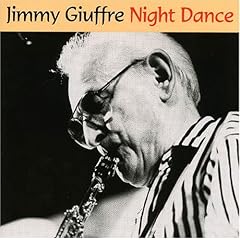
jimmy giuffre, night danceAfter recording and touring some of the most cool-toned yet innovative explorations in early-1960s jazz, multi-reed man Jimmy Giuffre was forced to disband his then-working trio (Paul Bley, piano and Steve Swallow, bass). This 2002 Candid CD reissue of a late 1971 recording for the Choice label marks Giuffre's return to the studio after nearly ten years -- with a new trio that is both more traditional than his previous one and yet also explores new terrain in Eastern tonalities.

After a remarkable series of mid-to-late 1950s recordings with his various drummerless trios for Capitol and Atlantic records (as well as a performance at the 1957 Newport Jazz Festival that opened the film Jazz on a Summer's Day), Giuffre recorded three masterpiece LPs with Bley and Swallow in 1961-1962: Fusion and Thesis for Verve (since reissued by ECM as the 2CD set 1961) and Free Fall for Columbia. Here was an approach to free improvisation -- cool, concise, and with a wonderful lyricism stemming from Giuffre's love of folk melodies -- that had little affinity with either the emotional exuberance of fellow Texan Ornette Coleman or the energy music that would follow the leads of Albert Ayler and John Coltrane.

As Steve Swallow states in the liner notes for the Free Fall CD reissue, "Shortly after our return to New York, we began a residency in a coffee house on Bleecker Street, playing for whatever money was collected at the door. We disbanded on a night we each made 35 cents." Clearly the world was not ready for this music. And for whatever other reasons, Giuffre did not record again for nearly ten years.

Which is why this reissue of Night Dance (an arguably better title than the original release: "Music for People, Birds, Butterflies and Mosquitos") is well worth hearing. Two facts immediately stand out here: first, with bassist Kiyoshi Tokunaga and percussionist Randy Kaye (about whom I have found little additional information), Giuffre turns to a traditional rhythm section for the first time since, near as I can tell, his self-titled Capitol leader debut of 1954. Second, Giuffre has taken up the tenor after his exclusive focus on clarinet (in Fusion, Thesis and Free Fall) as well as picked up the flute for (again, as near as I can tell) the first time.

One way through these dozen tracks, then, is according to Giuffre's instrument of choice for each, and it's definitely the flute that wins out here (6 out of 12 tracks) with clarinet taking a back seat (only 2 tracks). But to start with the tenor tracks, it makes sense that in returning to his earlier horn Giuffre would make these the tunes that have the most traditional, swinging jazz melodies ("Night Dance," "The Chanting" and "Eternal Chant" in particular). With the remaining tenor track ("The Dervish"), however, Giuffre imparts to his folk melodies and improvisation a decidedly Eastern tonality, one that runs through much of the rest of this album. And as it turns out, Giuffre's light-toned tenor is perfect for the swirling, melismatic lines he spins. These, along with the flute and clarinet tracks, demonstrate Giuffre's characteristic folk melody sensibility stretching itself into Asian, Middle Eastern or simply non-occidental realms.

Giuffre has found the perfect accompanists for his return to the studios. Tokunaga's simple bass figures sometimes ground Giuffre's solos and sometimes double the melodies; his arco work on "Feast Dance" and "The Bird" blend wonderfully with Giuffre's clarinet and flute repsectively. Kaye's playing is appropriately understated, but he also makes his presence felt when needed: the stop-time of "The Waiting" (the one tune that perhaps most resembles the Fusion/Thesis recordings), the gong that interjects regularly throughout the AB rondo swing of "Mosquito Dance," and the free tempo flute pieces ("The Butterfly" and "Flute Song") that nearly conclude the album and really provide its emotional focus and weight.

In a review of the original LP for the allmusic guide, Scott Yanow calls the music "moody, fairly spontaneous, and melodic, but often wandering and rather insubstantial" and concludes that "the overall results are not too memorable." Such an assessment is, in my estimation, quite off the mark. If only for his return to recording after nearly 10 years, this CD would have merit; given that it marks a logical progression in Guiffre's explorations of the trio format, marked by his great gift for folk melody newly pushing into the terrains that we would now consider "world music," Night Dance has to rank very high. This may not be the best first Giuffre CD to pick up, but at the budget price it's not a bad second or third; for fans and collectors, it's essential.

Friday, July 21, 2006

friday roundup

joshua holland's new piece at alternet may be the smartest thing i've read on the GWOT of late. the opening lines -- "There's never been a global war on terror. It's a sham, a ruse." -- are certainly eye-catching enough. but he's right on many levels. al-qaeda, hezbollah, hamas, hizbul mujahideen, jemaah islamiyah, etc. all have unique local reasons for their actions; eliding those differences and lumping them together under one banner actually adds fuel to their fire. perry and crooke say as much in the most recent installment of their "how to lose the war on terror" series at the asia times:
This, in fact, is the doctrine of Islamic revolutionaries: that in refusing to differentiate between al-Qaeda and more moderate groups, in refusing to empower them in their own societies, and in denying the peoples of the region the tools of democracy and self-government that the West extols, the United States and its allies would actually help to spread the jihad, just as the Soviet Union had done by its actions in Afghanistan.
in fact, following our lead in pounding afghanistan and iraq, israel is justified in pounding hezbollah, russia the chechans, china the uighurs, etc. likewise our "common terrorist enemies" are emboldened. hezbollah is not stupid, they knew they were going to take a pounding. but they also knew they'd gain serious street cred in the islamic world for taking that pounding and standing up to the bully on the block. and they also have much stronger political legs to stand on at home than the iraqi resistance for example.

-----------

i completely missed this. our president practicing more compassionate conservatism on the german chancellor. (boy, what with the whole pig-eating business, the smackdown he received from putin (how's his soul looking now, jackass?), and the off-mike lunchtime chat with tony blair, that G8 summit was a real successful outing, eh dubya?

-----------

interesting conversation between onnesha roychoudhuri and michelle goldberg, author of the recent kingdom coming: the rise of christian nationalism, which attempts to carve out "christian nationalists" as a a subset of the larger evangelical population:
Roychoudhuri: You frequently discuss the similarities between Christian Nationalism and fascism and totalitarianism. Were you conflicted about broaching this?

Goldberg: Among liberals, there is always talk about fascism and there's a kind of agreement that you can't talk about it more publicly without sounding like a lunatic. You don't want to sound like you're comparing Bush to Hitler. We have no language to talk about the intermediate stages of this kind of thing. But there are these really unmistakable parallels to fascism, not as a government system, but to fascism in its early stages. Before fascism is a government, it's a movement. It's not born in power, it comes to power. I think it's time to talk about fascism or another word for it. Christian Nationalism is one way to talk about it. But there are things that are going on that are not normal, they're not politics usual.

These things are always subtle and gradual, but there are moments when all of a sudden you think "Oh, they're drawing up lists of people who are gay at public agencies."
the "not having a language to talk about the intermediate stages" is key i think.

-----------

larry johnson making some excellent points, relative to israel but certainly substitute "united states" and the same holds true:
there is one simple question Israel cannot answer about the current operations-what is their strategic military objective.[...] The events in the next several weeks will expose as myth the canard that you can secure a nation by killing terrorists. No you can't. Killing "terrorists" has a place in policy but it is not a strategic military obective. It is a tactical objective and may serve political purposes, but achieves little in terms of securing Israel.

What about Hamas and Hezbollah? They are not terrorists. They carry out terrorist attacks, but they are not terrorists. They are something far more dangerous. They are a fully functioning political, social, religious, and military organizations that use terrorism tactics, but they are far more formidible than terrorist groups like Al Qaeda or the Basque Terrorist Organization. They do have the resources and the personnel to project force, sustain operations, and cannot be easily defeated. [...] Israel is not attacking the individuals who hit their soldiers. Israel is engaged in mass punishment.
the u.s. has no military objective either -- in iraq or in the GWOT. and likewise we still have not captured the individual responsible for the 9/11 attacks but instead have engaged in mass punishment.

now i realize by suggesting we substitute "united states" for "israel" here i am engaging eliding differences in a manner i rejected above. there are parallels, but that does not make for the easy "proxy war" arguments advanced by the likes of bill kristol, who foolishly thinks we should just go ahead and launch a military strike to take out iran's nuclear reactors. (why wait?)

-----------

do we yet realize how bad things are in iraq? 27,000 families displaced since the bombing of the shiite shrine in samara five months ago, 1,117 of them displaced last week alone? an average of 100 iraqi civilian casualties a day? 14,338 since january 2006? these are civilians, and these are probably conservative numbers.

negroponte won't produce a new national intelligence estimate because he knows it'll be worse than the last one. no one in this administration will use the words that those of us in the reality-based community have accepted: civil war. bombings and shootings in baghdad up 40%.
"We have not witnessed the reduction in violence one would have hoped for in a perfect world," [US military spokesman Major General William] Caldwell told reporters. "The only way we're going to be successful in Baghdad is to get the weapons off the streets."
get the weapons off the streets? good luck: too bad reality is so different from the perfect world.

-----------

it seems, tho, the the rest of the u.s. foreign policy establishment is, as they did in the run-up to gulf war II, willing to follow the neocon rabbits right down the hole. as jim lobe writes in the asia times ("The drums of war sound for Iran"):
the US Senate voted unanimously on Tuesday to approve a resolution that not only endorsed Israel's military actions in Gaza and Lebanon without calling on it to exercise any restraint, but also urged US President George W Bush to impose across-the-board diplomatic and economic sanctions on Tehran and Damascus. The House of Representatives was expected to pass a similar resolution on Thursday.
the sanctions aspect of this is being underreported in the U.S. media as far as i can tell: lexis-nexis isn't turning up much of anything on this yet, but a google news search is turning up "about 358" hits for me on a broader set of terms (house, senate, resolution, iran, syria) but only "about 21" hits for a more specific set including "sanctions" (house, senate, resolution, sanctions, iran, syria).

the whole is worth checking out, but i reproduce this particularly chilling passage:
"There has been a lot of connecting of the dots back to Iran," said retired Colonel August Richard Norton, who teaches international relations at Boston University. "This goes well beyond the [neo-conservative] Weekly Standard crowd; we've seen the major newspapers all accept the premise that what happened July 12 was engineered in some way by Iran as a way of undermining efforts to impede its nuclear program."

Graham Fuller, a former top Central Intelligence Agency and RAND Corporation Middle East expert, noted that there has been a "buildup of domestic forces that now see Iran as inexorably at the center of the entire regional spider web".

"The mainstream is unfortunately grasping for coherent explanations, [and] the neo-con/hard right offers a fairly simple, self-serving vision on the cause of the problems, and their solution," Fuller said.

In much the same way that Saddam Hussein was depicted, particularly by neo-conservatives, as the strategic domino whose fall would unleash a process of democratization, de-radicalization, moderation and modernization throughout the Middle East, so now Iran is portrayed as the "Gordian Knot" whose cutting would not only redress many of Washington's recent setbacks, but also renew prospects for regional "transformation" in the way that it was originally intended.

The notion that, as the puppetmaster behind Syria, Hezbollah, Hamas and Shi'ite militias in Iraq, an aggressive and emboldened Iran is the source of Washington's many problems has the added virtue of relieving the policy establishment in Washington of responsibility for the predicament in which the US finds itself or of the necessity for "painful self-examination, or serious policy revision", said Fuller.

"Full speed ahead - no revision of fundamental premises is required. And even though we revel in being the sole global superpower, God forbid that anything the US has done in the region might have at least contributed to the present disaster scene," he said.
down the rabbit hole we go...

-----------

so where was dubya today? fundraising in colorado. (see the denver post and cbs4 denver)

what does he have to say? "You do some hard things," he said. "It's hard work to defeat the terrorists." (clearly his thinking has not advanced since the 2nd presidential debate of 2000.)

what brilliant analyisis does the wapo's michael abramowitz offer?
When hostilities have broken out in the past, the usual U.S. response has been an immediate and public bout of diplomacy aimed at a cease-fire, in the hopes of ensuring that the crisis would not escalate. This week, however, even in the face of growing international demands, the White House has studiously avoided any hint of impatience with Israel. While making it plain it wants civilian casualties limited, the administration is also content to see the Israelis inflict the maximum damage possible on Hezbollah. [...]

"He thinks he is playing in a longer-term game than the tacticians," said [one] former [senior admnistration] official, who spoke anonymously so he could discuss his views candidly. "The tacticians would say: 'Get an immediate cease-fire. Deal first with the humanitarian factors.' The president would say: 'You have an opportunity to really grind down Hezbollah. Let's take it, even if there are other serious consequences that will have to be managed.'"
peace through protracted warfare and suffering. compassionate conservatism, Q.E.D.

Wednesday, July 19, 2006

Tragic situations to help bring clarity

From tmorange
Sent Wednesday, July 19, 2006 11:06 am
To letters@washpost.com
Subject Tragic situations to help bring clarity

Dear Editors,

"Sometimes it requires tragic situations to help bring clarity in the international community." This is what our president told members of Congress about the current crisis between Israel and Lebanon at a post-G8 summit briefing yesterday.

Quite a cold and callous remark, even for someone who dons the mantle of compassionate conservatism. Nevermind the suffering of both the Lebanese and Israeli people at the hands of those who wield power on their behalf. Nevermind whether the military responses currently being levied by these two nations upon one another are in any respects measured or proportional to the wrongs suffered. For this president, it only ever adds up to one thing: "there are terrorist elements who want to destroy our democratic friends and allies."

News flash, Mr. President: Americans have known this all-too well since 9/11. And I shudder to think of the howls of objection that would be raised if one dared suggest that 9/11 was a similar "tragic situation" that "help[ed] bring clarity in the international community," even though the global war on terrorism has since brought clarity and focus to Bush's then and still abysmal presidency.

[sent also to Los Angeles Times, Chicago Tribune, USA Today, New York Times, Wall Street Journal, Chicago Sun-Times, Florida Times-Union, Quad-City Times, Richmond Times-Dispatch, Roanoke Times, Asheville Citizen-Times, Seattle Times, St. Petersburg Times, Times-Picayune, Washington Times, Charlotte Post, Cincinnati Post, Columbus Post, Connecticut Post, Denver Post, Dover Post, Pittsburgh Post-Gazette, Post and Courier, Seattle Post-Intelligencer, St. Louis Post-Dispatch, Anchorage Daily News, Dallas Morning News, Detroit News, Duluth News Tribune, Greensboro News & Record, Greensboro News & Record, Knoxville News-Sentinel, New York Daily News, News & Observer (Raleigh), Pensacola News Journal, Rocky Mountain News, San Antonio Express-News, San Jose Mercury News, Savannah Morning News, Wheeling News-Register, Akron Beacon Journal, Atlanta Journal-Constitution, Flint Journal, Lansing State Journal, Las Vegas Review-Journal, Lincoln Journal Star, Louisville Courier-Journal, Milwaukee Journal Sentinel, Pensacola News Journal, Peoria Journal-Star, Providence Journal, Reno Gazette-Journal, Sioux City Journal, Topeka Capital-Journal, Winston-Salem Journal, Austin Chronicle, Democrat & Chronicle, Houston Chronicle, San Francisco Chronicle, Decatur Herald & Review, Lexington Herald-Leader, Miami Herald, Omaha World-Herald, Sarasota Herald-Tribune, Cleveland Plain Dealer, Albuquerque Tribune, Minneapolis Star Tribune, Oakland Tribune, Salt Lake Tribune, Arizona Daily Star, Fort Worth Star-Telegram, Indianapolis Star, Kansas City Star, Tribune Star, Amarillo Globe-News, Boston Globe, Sioux City Globe, Cedar Rapids Gazette, Charleston Gazette, Colorado Springs Gazette, Fort Wayne Journal Gazette, Kalamazoo Gazette, ABC News, CBS News, Fox News Channel, MSNBC, NBC News, Public Broadcasting Service, American Conservative, Gannett News Service, Reuters America, Scripps Howard News Service, States News Service, United Press International, American Enterprise, American Prospect, American Spectator, Congressional Quarterly, Cook Political Report, CovertAction Quarterly, Human Events, National Journal Magazine, Public Interest, Roll Call, Washington Monthly, Weekly Standard, New Republic, US News & World Report]

Tuesday, July 18, 2006

Gonzales aids and abets

Dear Editors,

What part of the Supreme Court's decision in Hamdan that "the Executive is bound to comply with the Rule of Law" does this administration not understand?

At a hearing before the Senate Judiciary Committee today, Attorney General Alberto Gonzales was asked by Senator Patrick Leahy, "Is it the administration's position... that we should simply ratify the military-commission procedures that the president designed and the Supreme Court struck down in Hamdan? Gonzales replied: "That would certainly be one alternative that Congress could consider."

It's bad enough that this adminstration continues to mobilize everything from contorted legalisms to open defiance in asserting unprecedented executive authority. Now its deputies are blatantly throwing checks and balances out the window by encouraging the Senate to disregard the ruling of the Supreme Court as well.

Gonzales can no longer say he was just following orders: he is now aiding and abetting a clear violation of stated law.

[sent to: Chicago Tribune, USA Today, New York Times, Washington Post, Wall Street Journal, Asheville Citizen-Times, Chattanooga Times Free Press, Chicago Sun-Times, Quad-City Times, Richmond Times-Dispatch, Seattle Times, St. Petersburg Times, Times-Picayune, Trenton Times, Washington Times, Charlotte Post, Cincinnati Post, Columbus Post, Dallas Post Tribune, Denver Post, Dover Post, Hannibal Courier-Post, Newark Post, Pittsburgh Post-Gazette, Post-Standard, Connecticut Post, Post and Courier, Seattle Post-Intelligencer, St. Louis Post-Dispatch, SunPost, Akron Beacon Journal, Albuquerque Journal, Atlanta Journal-Constitution, Flint Journal, Lansing State Journal, Lincoln Journal Star, Louisville Courier-Journal, Milwaukee Journal Sentinel, Pensacola News Journal, Peoria Journal-Star, Providence Journal, Salem Statesman-Journal, Sioux City Journal, Topeka Capital-Journal, Winston-Salem Journal, Anchorage Daily News, Champaign News-Gazette, Dallas Morning News, Daytona Beach News-Journal, Detroit News, Duluth News Tribune, Greensboro News & Record, Knoxville News-Sentinel, News & Observer, Rocky Mountain News, San Antonio Express-News, San Jose Mercury News, Santa Barbara News-Press, Savannah Morning News, Springfield News-Leader, Albuquerque Tribune, Chicago Tribune, Minneapolis Star Tribune, Oakland Tribune, Tampa Tribune, Decatur Herald & Review, Hawaii Tribune-Herald, Miami Herald, Omaha World-Herald, Sarasota Herald-Tribune, Boston Globe, Sioux City Globe, Arizona Daily Star, Fort Worth Star-Telegram, Indianapolis Star, Kansas City Star, Minneapolis Star Tribune, Baltimore Sun, Gainesville Sun, Las Vegas Sun, San Bernadino County Sun, South Florida Sun-Sentinel, Des Moines Register, Mobile Register, New Haven Register, Orange County Register, Wheeling News-Register, ABC News, CBS News, Fox News Channel, MSNBC, NBC News, Public Broadcasting Service, Gannett News Service, Reuters America - Washington Bureau, Scripps Howard News Service, States News Service, Talk Radio News Service, United Press International, American Conservative, American Enterprise, American Prospect, American Spectator, Congressional Quarterly, Cook Political Report, Human Events, National Journal Magazine, Public Interest, Washington Monthly, Weekly Standard, New Republic, US News & World Report]

Monday, July 17, 2006

aflame and adrift

If Bush and his top officials arrived on the Iraqi scene believing that the force was with them and only them, the last three-plus years have offered (if not taught) a rather different lesson. After all, they now find themselves in a roiling crowd of medium-sized and smaller states, stateless movements, and extremist grouplets, all passionately devoted to the same principle of force as them. The fundamentalist belief in force, once let loose in this fashion -- once (you might say) modeled by the globe's reigning hyperpower -- turns out to be a distinctly pagan faith. From the streets of Gaza to the slums of Baghdad, from the mountains of Afghanistan to Beirut International Airport and the halls of the Pentagon, this is a religion open to one and all, ready to embrace many contradictory gods into its pantheon.

And here's the irony. The hyperpower that loosed this singular round of force on our world seems strangely sidelined, while others move boldly to apply its most essential principles profligately, every one of them emboldened both by our example and by our dismal failure. Talk about Pandora's Box (without Hope anywhere in sight)!
from tom engelhardt's latest sobering account of where this president and his minions have taken us right now ("The Force Is Not with Them: The Middle East Aflame and the Bush Administration Adrift"). Read entire.

paul krugman, "march of folly"

the view from the reality-based community, this is really too good not to post in full...

"March of Folly"
by Paul Krugman
The New York Times, July 17, 2006, Section A Pg. 17

Since those who fail to learn from history are doomed to repeat it -- and since the cast of characters making pronouncements on the crisis in the Middle East is very much the same as it was three or four years ago -- it seems like a good idea to travel down memory lane. Here's what they said and when they said it:
"The greatest thing to come out of [invading Iraq] for the world economy would be $20 a barrel for oil." Rupert Murdoch, chairman of News Corporation (which owns Fox News), February 2003

"Oil Touches Record $78 on Mideast Conflict." Headline on www.foxnews.com, July 14, 2006

"The administration's top budget official estimated today that the cost of a war with Iraq could be in the range of $50 billion to $60 billion," saying that "earlier estimates of $100 billion to $200 billion in Iraq war costs by Lawrence B. Lindsey, Mr. Bush's former chief economic adviser, were too high." The New York Times, Dec. 31, 2002

"According to C.B.O.'s estimates, from the time U.S. forces invaded Iraq in March 2003, $290 billion has been allocated for activities in Iraq. Additional costs over the 2007-2016 period would total an estimated $202 billion under the first [optimistic] scenario, and $406 billion under the second one." Congressional Budget Office, July 13, 2006

"Peacekeeping requirements in Iraq might be much lower than historical experience in the Balkans suggests. There's been none of the record in Iraq of ethnic militias fighting one another that produced so much bloodshed and permanent scars in Bosnia." Paul Wolfowitz, deputy secretary of defense and now president of the World Bank, Feb. 27, 2003

"West Baghdad is no stranger to bombings and killings, but in the past few days all restraint has vanished in an orgy of 'ethnic cleansing.' Shia gunmen are seeking to drive out the once-dominant Sunni minority and the Sunnis are forming neighborhood posses to retaliate. Mosques are being attacked. Scores of innocent civilians have been killed, their bodies left lying in the streets." The Times of London, July 14, 2006

"Earlier this week, I traveled to Baghdad to visit the capital of a free and democratic Iraq." President Bush, June 17, 2006

"People are doing the same as [in] Saddam's time and worse. These were the precise reasons that we fought Saddam and now we are seeing the same things." Ayad Allawi, Mr. Bush's choice as Iraq's first post-Saddam prime minister, November 2005

"Iraq's new government has another able leader in Speaker Mashhadani. He rejects the use of violence for political ends. And by agreeing to serve in a prominent role in this new unity government, he's demonstrating leadership and courage." President Bush, May 22, 2006

"Some people say 'we saw you beheading, kidnappings and killing. In the end we even started kidnapping women who are our honor.' These acts are not the work of Iraqis. I am sure that he who does this is a Jew and the son of a Jew." Mahmoud Mashhadani, speaker of the Iraqi Parliament, July 13, 2006

"My fellow citizens, not only can we win the war in Iraq, we are winning the war in Iraq." President Bush, Dec. 18, 2005

"I think I would answer that by telling you I don't think we're losing." Gen. Peter Schoomaker, the Army chief of staff, when asked whether we're winning in Iraq, July 14, 2006

"Regime change in Iraq would bring about a number of benefits for the region. Extremists in the region would have to rethink their strategy of jihad. Moderates throughout the region would take heart, and our ability to advance the Israeli-Palestinian peace process would be enhanced." Vice President Dick Cheney, Aug. 26, 2002

"Bush -- The world is coming unglued before his eyes. His naive dreams are a Wilsonian disaster." Newsweek Conventional Wisdom Watch, July 24, 2006 edition

"It's time for Democrats who distrust President Bush to acknowledge that he will be the commander in chief for three more critical years, and that in matters of war, we undermine presidential credibility at our nation's peril." Senator Joseph Lieberman, Democrat of Connecticut, Dec. 6, 2005

"I cannot support a failed foreign policy. History teaches us that it is often easier to make war than peace. This administration is just learning that lesson right now." Representative Tom DeLay, Republican of Texas, on the campaign against Slobodan Milosevic, April 28, 1999

Sunday, July 16, 2006

gilmore as sideman

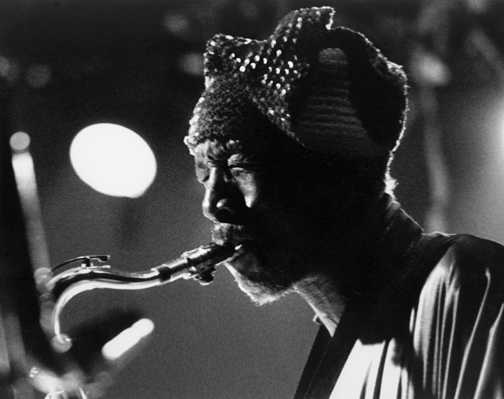
john gilmorein repsonse to taylor's query about gilmore's work as a sideman, there's a bunch of stuff actually, very little of which i've actually heard. but here's the list, culled from allmusic.com:
  • Blowing in From Chicago - Clifford Jordan and John Gilmore (1957 blue note date, w/ horace silver, curley russell and art blakey)
  • The Artistry of Freddie Hubbard - Freddie Hubbard (1962 impulse date w/ curtis fuller, tommy flanagan, art davis and louis hayes)
  • Sounds from Rikers Island - Elmo Hope (1963 audio fidelity date w/ ronnie boykins and philly joe jones et al.)
  • Today and Tomorrow - McCoy Tyner (1963/4 impulse date, three tracks w/ gilmore, thad jones, butch warren and elvin jones)
  • Andrew!!! - Andrew Hill (1964 blue note date w/ bobby hutcherson, richard davis and joe chambers) -- i have this, it's v. good!
  • turns/ turning point - paul bley (1964 savoy dates w/ gary peacock and paul motion, "turns" is the savoy reissue but bley also reissued it on his own improvising artists label; some track diffs b/w the two reissues)
  • 'S Make It - Art Blakey & the Jazz Messengers (1965 limelight date w/ lee morgan, curtis fuller, john hicks et al.)
  • Compulsion - Andrew Hill (1965 blue note date w/ freddie hubbard, cecil mcbee, joe chambers et al.) -- this is also an excellent session
  • *Bliss! - Pete La Roca & Chick Corea (1967 muse LP, no session info)
  • Turkish Women at the Bath - Pete La Roca (douglas LP reissued on CD by 32 jazz, can't tell if is the same as the above or different)
  • Feeling Blue - Phil Upchurch (1967 milestone LP reissued as an OJC CD, w/ jimmy cobb, richard davis, wynton kelly, pat patrick, warren smith)
  • *From In to Out - Dizzy Reece (1970 futura LP, w/ art taylor the only other musician i've heard of)

    *=LP only, no CD reissue to my knowledge


would make a fun project to pick this stuff up, work through it and compile a glimore best of. (i agree taylor, the bley session intrigues a great deal!)

Saturday, July 15, 2006

spotting john gilmore

sometimes it's not easy to identify sun ra's reed players, either on record by their sound or in the documentation since the liner notes are not always complete or accurate. some of the best statements by longtime unheralded tenor saxophone great john gilmore can be found on "sketch," track three from the other planes of there CD, where what starts of sounding like a routinely swinging medium-tempo number turns, by around 2:20, a glossolalic showcase for gilmore; and likewise track 2 on cymbals (disc 1 from the great lost sun ra albums), "thoughts under a dark blue light," shines its spotlight on gilmore from around 1:40 to 7:20.

Friday, July 14, 2006

from man to pig

quote of the day:
"We look from man to pig, and from pig to man again; but it is impossible to say which is which." -- Louis Menand, "Francis Fukuyama and the neoconservatives," The New Yorker, 27 March 2006.
context: increasingly, neocons are forced in the wake of bush administration foreign policy failures to defend their theories by arguing that the bushies have simply not adequately practiced what are essentially still sound neocon theories and principles. well, this is bill kristol's position anyway; fukuyama at least now concedes that some of the theories are bogus. thanks to josh marshall and glenn greenwald for the tips. kevin baker has an interesting, indirect take on this in the current harper's ("Stabbed in the Back! The past and future of a right-wing myth"), taking a long look at post-WWII american politics to show how the tendency of right-wing foreign policy to have a scapegoat for all occasions now too is unravelling.

menand's quote above now takes on even greater truth some 3-1/2 months later in light of this president's recent press conference in germany. from the daily show, courtesy of crooks and liars: do not miss this (videostream for WMP or QT).

Thursday, July 13, 2006

back in DC

biddy's... and after a decent night's sleep i may be over the jetlag and sleeplessness of the past four days. yesterday for example i went to bed at the equivalent of 7:30pm EDT and woke up around 11:30pm, boarded the plane from heathrow at 5am, arrived in DC around 5pm and went to see the gang at biddy's and retired after 24 hours of wakefulness. (help, i think i'm jack bauer!)

collier's wood tubeto pick up where i left off, i phoned tim right away from outside the internet cafe on charing cross road and, to my great delight, he was home, asked what i was up to and if i needed to be put up for the night! i quickly hit the northern line and rode it all the way out to near its southern end, the collier's wood neighborhood where tim met me and walked me to his and chiaki's place. we relaxed a bit before driving over to nearby tooting for some pakistani food while we watched italy win the world cup in a shootout. (i missed zidane's headbutt but saw the clip endlessly on TV the next day.)

we all went to bed early but i found myself wide awake at 4am GMT with little to do but read as much of the alice notley in tim's poetry collection as i could find. starting from the beginning, the C press edition of her twenty four sonnets, which i have in the tom clark all stars anthology but have not read in a while, gosh they're so good. then i read alice ordered me alice ordered me to be madeto be made straight through, and again it's such wonderful and exciting work. skimmed through the rest of the poems from out there #4 that tim did not include in his onedit reprint of her 1973 followup sonnet sequence great interiors, wines and spirits of the world. couldn't make it all the way through a diamond necklance but i'm starting finally to get a sense of how her work develops. if i wrote earlier that i found her poems for the unborn second baby chaotic and unfocused relative to her more recent mytho-narrative work it's because her mid-1970s stuff is really working out a consistently high level of experimentation. i was remarking to tim later, as we were talking about all the great book projects that need to happen, how as someone who started collecting poetry later than he did i missed the chance to acquire the 1970s books by notley and mayer at reasonable prices and that the literal material conditions of poetry's circulation have a pronounced effect on how the work is read and understood. (think of the people younger than me for example who know coolidge primarily through the on the nameways books because that's what's easily available in print at the moment...)

cafe in the crypt st martinso tim saw me off to the tube which i rode back to waterloo station where i met peter, my old mate from the london ontario days who's been teaching in london now for a number of years. he took me to a cafe in the crypt at st martin's in the field and treated me to apple crumble with custard and a coffee, filled me in on the british academic system and caught up in general. we stopped by a CD store where i picked up the supercheap quadromania 4CD sets of clifford brown (of which i own hardly anything) and shorty rogers (great early 1950s west coast small and medium size ensembles with cool horn arrangements, art pepper on much of it and jimmy giuffre on almost all) before boarding the train...

southamptonto southampton, a pretty nice city of 300,000, on the water in south central england, historically a port town, 80 miles southwest of london, an hour and 15 minutes by train. to the extent that it is provincial relative to cosmopolitan london, it reminds me of london ontario relative to toronto. very liveable: a pretty thriving commercial district, some fine arts activity, lots of parks and commons, university of southamptonaffordable relative to london. the main campus of the university is in the north central part of the city and the english deparmtment in a little satellite campus dropped into the middle of a nice residential district. i won't talk about the interview here except to say that i feel it went pretty well, especially for a first interview.

after which i hopped onto the 6:30pm train back to london, where peter met me and took me to meet tim, chiaki and jeff at this great indian restaurant just off piccadilly circus where they focused on three specific regional cuisines (i can't remember the names) which we all shared with excitement and merriment. afterward we walked over the virgin megastore where tim had earlier found some bargain CDs in the £1.99 bin. i picked up a wonderful musique du monde release of a tanzanian group called maisha, headed by david kitururu and performing traditional music from the metal tube & consciousnessmaishamakonde region (xylophones, percussion, singing, flute: definite hypnotic groove). peter found and kindly let me pick up metal tube & consciousness, a solo soprano saxophone recording by ariel shibolet on the british leo label; it's derivative in some respects of evan parker's technique but is nevertheless quite interesting in its own right, minimalist and ins ome repsects evocative of steve reich, perhaps a walking middle ground between parker and urs leimgruber.
so the gang all parted ways and peter and i took the tube back to his place near finsbury park, an attic room in a house he shares with a fiftysomething himalayan mountain climber. we were both exhausted and a 6am wakeup time was required the next a.m. in order to safely make a 10am flight out of heathrow. again i woke up on my own after only a few hours of sleep, 4:30am GMT = 11:30pm EDT. the flight was long and largely unnoteworthy except for the unprecedented levels (in my experience) of security at montreal's trudeau airport (where not only did we all go through about six checkpoints and searches but had to get off the plane once they had already started boarding to let a security team onboard to do a sweep of the plane) and reading in the guardian, in six separate pieces, about the death of syd barrett. most apt quote IMHO comes from "The lure of the damaged" by Michael Hann:
Jason Pierce of Spiritualized offered the most succinct version of rock's vision of mental illness in the documentary The Devil and Daniel Johnston. "People like Daniel and Erickson - 'cos they're slightly damaged - have this great ability to touch your heart because they don't know where to stop," he said.
which brings us full circle to where i started this little travelog, and now conclude it as i listen to more african field recordings and catch up on email. thanks to all the kind words and well-wishing from readers!

the big trip out west, part three

the final installment...

[Thu June 24]

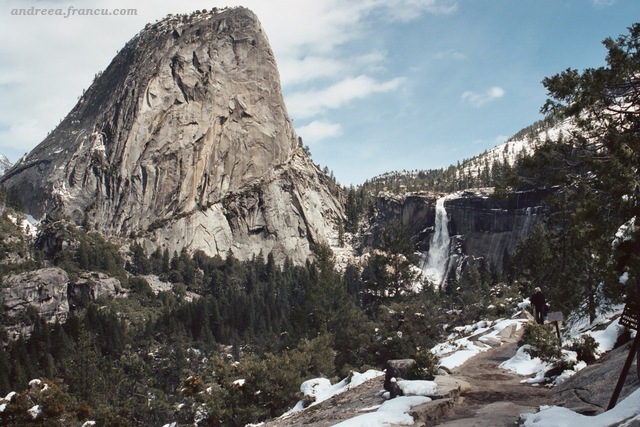
Dear Diary, Sorry I didn't write but I was busy. Today we went to Yosemite Nat. PArk. We skiped breakfast & had lunch at a McDonald's in Fresno, California. We came to a city called Fish Camp that had 36 people! Then we came to Yosemite. Then we came to a campground called Crane Flat. Then Lisa & I went to look for a near by Restroom. Then we had supper. We has Fish, salad, peas, break, & milk. Then I went walking around. One my way I met this kid we wandered around awile. Then i had my desert, cantiloupe (YUMMMMMMMMMMMMMMMMMM!) Tomorrow we plan to go on a long hike.
     Well, that's all, folks.


[Fri Jul 16]

Dear Diary, Sorry I haven't writen in a while but I've been busy. The Great trip has now ended. (WAAHHH) We got home yesterday. The house seems so big. Today we started to clean the Motorhome. Boy, is it a mess. Dad & I kept on bringing things inside. You should have seen the bag of mail we got! Wow! I got a few things. Both were stamps. Then we got some hard rain. My birthday is coming. (YEAAAAAAAAAAAAAAAAAAAAAAAAHH) I'm going to try & do something everyday. My bike has a low tire on it (RATS!) Tomorrow I get my allownace. (YEAH) I'm going to use it on my stamps. I've got a whole bunch of Poland stamps.
Well, That's all, folks!


Sunday, July 09, 2006

from charing cross road

...which i only JUST found out is london's haven for used booksellers. i have come to england hopefully as a prepared job candidate but woefully underprepared as a tourist.

the overnight trips to europe pretty much always put me on no sleep for the next day. but you have to tough it out, and unprepared it can be pretty tough. but fun! after landing at heathrow at what was for me 2:30am EDT and going through a tortuously long customs line, my only plan was to 1) buy a cheap travel guide, 2) find an ATM and get myself some brit cash money, and 3) get to waterloo station and store my larger carryon bag for the night so that i wouldn't have to drag it all over town with me today and could instead just pick it up before getting the train to southampton. all three missions accomplished, however bleary-eyed!

my only other plan was to see the tate modern: which, as it turns out, is within easy walking distance of waterloo station, right along the south bank of the mighty murky thames. perfect. and what is the very last restaurant i come to along the bank before arriving at the tate: a joint run by the fine folks at young's brewery! trust me tho, the many interesting kinds of young's beer on tap they had to offer looked tempting, but coffee had to be my drink of choice to go alongside the traditional "full english breakfast" of eggs, bacon, sausage, toast, beans, tomatos, and mushrooms. sounds weird, and frankly the last three items indeed are what make it weird: beans, as in baked beans, in a straight tomato-y sauce (not barbequed and molassassed at all), sorta straight outta the can; tomatos, as in stewed whole plum tomatoes, also seemingly straight outta the can; and little whole mushrooms, browned somehow, and like straight out of a jar rather than a can. but who the hell cares it was all totally tasty and worked for me.

and what is the big exhibit currently running at the tate modern? kandinsky: the road to abstraction! (or maybe it was the path to abstraction. ok yes, path.) oh it was so good. i heart kandinsky in a big way, and it was completely fascinating to see where he was coming from, as this was all stuff from 1908-1921. nine huge rooms of it! too much of course. but fascinating. like he was 40 in 1908 and still painting landscapes! unusual ones of course, and he quickly went the impressionist and post-impressionist ways. heavy expressionist or as the would call it in franco-non-teutonic places, fauvism. (that's probably a hugely incorrect art-historical leap i'm making there, but it's he brashness of colors that unites the fauvists and the expressionists. or rather, early kandinsky is that link maybe?) anyway, the incredibly variety of tones, palattes, and lines he gets are quite something. by the time he gets to his signature style it makes absolute sense logically. i love that, when you get a larger sense of the whole career and see that, for example, wow rothko had a brief klee/surrealist phase, or wow sol le witt had the seemingly manditory ab-ex phase...

anyway the kandinsky really took the wind outta my sails (that and the 7-item breakfast), plus i foolishly took a quick tour through the one portion of the tate modern's permanent collection which was also bewilderingly awesome. but i totally ran out of gas, so needing sleep and so wishing i knew exactly what my plans were for the next 24 hours, so hoping they include sleep and a friendly face! my contacts here are either out of town till later in the evening or not able to put me up for the night and one i simply hadn't heard back from. so i tried feebly to nap sitting upright on benches in the museum, i spent sometime in the tate bookstore looking at cool english versions of theory books that i don't have. (and what's up with zizek? man he's crankin 'em out these days.) i even took a totally pointless walk across the thames and found a youth hostel international, if i'd found an obvious entranceway i wouldve gone in and inquired about accommodations there.

finally i decided i'd go back to the tate, pick up the briefcase i'd checked there and go to a bookstore mentioned in my cheap travel guide. picadilly was only a few tube stations away, so off i went. the bookstores were of course lame -- one with no poetry section at all, another with all new stuff (waterstone, sorta like borders), but it was very interesting to see what was in print from british publishers, what american poets get picked up by bloodaxe and carcanet (can you say carolyn forcche and tony hoagland among others), and what other interesting editions of the americans were available. for example i got totally excited to see a 2-volume "new york school poets" edited for carcanet by mark ford. i would so totally teach those books! he does a pretty good job overall it seems, esp vol 2 which contains excellent coolidge and ceravolo selections. big big mistake, however, to relegate barbara guest to vol 2. BIG mistake. plus both vols are super dude-heavy (good selection of mayer but no alice notley?!?!) and need to be supplemented pretty heavily.

anyhow the nice lady at the customer service desk told me that charing cross road is the place for used booksellers -- a 10 minute walk so off i went! even tho in all likelihood, she warned me, they would all be closed (after 6pm on a sunday). nevertheless, the walk along picadilly towards leicester square was much closer to what i'd imagined london to be like. bustling. the south bank area was all people strolling, eating, jogging even, with lame guys singing "time in a bottle" to acoustic guitar. (mark, there's some psychic oblivion for you!) and when i saw a sign for an internet cafe charging 1 pound for an hour of internet access -- stuff *is* expensive here, it's like 6£ (cool they have a "£" key on this keyboard!) for a decent breakfast or an all-day tube pass but then you realize that's 10USD, or 10£ to see the kandinsky and then you realize that's like 17USD. anyway i couldn't resist checking the email and found, lo and behold, my london contact whom i never heard from was at a poetry festival in cork! so he's back, mebbe we'll meet up and my need for human contact and a place to stay will be solved! gonna go phone him, soccer fans are screaming...

Friday, July 07, 2006

wolfe on conservatives

recommended: alan wolfe's lengthy piece called "why conservatives can't govern" from the washington monthly. skip through part IV on the k street project if need be, but parts I (on the present state of things), especially II (the historical background) and III (on recent policy disasters) are essential reading. again makes you wonder how exactly we've gotten ourselves into this mess and if the democrats are remotely capable of getting us out. (thanks to barbara o'brien for the tip.)

Wednesday, July 05, 2006

Ike's Baby

From tmorange
Sent Wednesday, July 5, 2006 12:08 pm
To letters@uniontrib.com
Subject Ike's Baby

Dear Editors,

While your opinion pages this past Sunday fawned over "those gleaming ribbons of pavement [that] spawned giant industries and carried the middle class from tenements to home ownership" ("Ike's Baby") and Elizabeth Fitzsimons likewise waxed poetic about how "their daily rhythms define our own" and "by night their fluid ribbons of red and white lights can hypnotize us" ("An open road, a smaller world"), it would seem by such myopic accounts that this highway system and the freedoms it embodies just descended to us out of nowhere.

Sure, Fitzsimons acknowledges that "since the start of construction in 1956, the federal government has shouldered most of the $128.9 billion total cost." What she and your opinion writer fail to do is call such a program by its proper name: socialism. That's right, American taxpayers bought and paid for the interstate highway system, each giving up a tiny fraction of their own income to achieve what none could on their own: a greater good for all.

Free market fundamentalists and neocon foreign policy hawks, take note. Freedom usually comes with a price tag. The freedom that we are ostensibly promoting in Iraq right now -- ironic that we're only getting to it now given that some twenty-five years ago when he was gassing Kurds, Saddam Hussein was our ally -- has already cost this country more than double what we've spent on interstate highways in fifty years, and will likely be near triple that by the end of this fiscal year (to say nothing of the Iraq War's human costs). One can only imagine what the people of this country could accomplish if such sums were spent improving freedom and opportunity here at home.

Monday, July 03, 2006

from carlsbad

from the home office in carlsbad, california...

first, a slight retraction of my original assessment of san clemente: if you get off the el camino real and go down to the waterfront (which i wouldve if it were not for the fact that the morning clouds had burned off and the afternoon sun was pounding down on me unremittingly) you get quite a different picture. no light industry and surf board shops here, but lovely beachfront property bordering on the super opulent.

i gained this newfound view of san clemente on the train ride back from LA to carlsbad with mark and lorraine (which of course passed right by the capistrano beach house) after an evening and a day in LA, with catherine as our host and reading organizer. upon arrival friday we went to her and ron's place in the west adams neighborhood (lafayette park i think? basically near crenshaw and venice), stopped by the la brea tarpits (lorraine has photos i'll link to once they're up), back to her place for a quick early dinner, then off to beyond baroque where a small but warm and enthusiastic group greated us. was very happy to see logan after probably some 4 or 5 years, well-situated as is he at chapman college in orange, CA. also great to meet stan and fred and mark and pablo among others. BB has a great treasure trove of chapbooks and publications that readers have donated throughout the years, and i was able to pick up some books that i surely would not have been able to get elsewhere (including something special for you kap if yr tuning into this). then for drinks and mexican food at some nearby establishments and back home.

saturday we had a lovely home-cooked breakfast with ron and catherine and poe, then off to amoeba music where, under a group-imposed time constraint, i still managed to snag some great CDs. (and a good thing i was nuder a constraint cuz i may not have gotten outta there alive otherwise.) here's the quick version of what i emailed rod, bill and kevin regardnig the purchases:

william parker in order to survive - compassion seizes bed-stuy (homestead) - 1995 quartet w/ rob brown, cooper-moore and susie ibarra, it's hot


roy campbell pyramid trio - ancestral homeland (no more records) - 1998 session with william parker and zen matsuura on drums (it's hot: never heard of him before but he's hot: never underestimate the unknown japanese percussionist!)


byard lancaster - it's not up to us (vortex reissue on water) - 1968 quintet session w/sonny sharrock, all pretty mellow or much more than you'd think given the lineup (reviewed here)


paul rutherford - chicago 2002 (emanem) - all from the empty bottle, half-hour solo piece plus 3 tracks (46 minutes) of a septet featuring jeb bishop, lol coxhill, mats gustafsson, fred lonberg-holm, kent kessler and kjell nordeson


bill dixon - collection (cadence 2CD set) - according to dixon's website this was an unauthorized CD reissue of a 2LP vinly set that cadence jazz records did, music for solo trumpet recorded 1971-1976.


frode gjerstad trio - last first (falcata-galia) - a label and recording i've never heard of before, but the trio includes oyvind storesund (bass, never heard of him) and pall nilssen-love, 60 minute studio recording from 1999 and figuring that this is not much of a gamble.


sun ra - fate in a pleasant mood / when sun comes out (evidence)
sun ra - other planes of there (evidence)
sun ra - cymbals and crystal spears, the great lost sun ra albums (evidence 2CD)
the first disc couples his last chicago session (1960/61) with one of his first NYC sessions (1962/63), the second is from 1964 and features (on the title track) one of his sole efforts at a thru-composed piece, and the third set is from 1973 when impulse bailed on its promise to issue new sun ra recordings done in quadrophonic sound. these pretty much fill out my collection of evidence sun ra reissues, the only ones i'm lacking being the solo LP (monorails and satellites), the greatest hits CD, and the only remaining one that i should get (sound sun pleasure plus sun ra's first seven sides)
aside from the sun ra it turned out to be a very visionfestival-related set of purchases, everyone (except gjerstad) having played at it (or, in the case of lancaster, scheduled to) the other week.

anyway from amoeba we went to the museum of contemporary art to see the robert rauschenberg "combines" exhibit, which was just smashing. can't even really elaborate, but let's just say that this was a late 1950s early 1960s dada-inspired effort to break down boundaries between painting and sculpture, with rauschenberg incorporating various found objects into and onto and out of the surface of the painting itself. as with any kind of collagist art, the selection of materials is always the most fascinating thing: why pants pockets, bird feathers for example. and then to decide what if any commentary is being made by the choice of materials, the titles of the individual pieces, etc. wish i could go back and see this many times.

also on display was an excellent lorna simpson show. she uses images (still photos and video) and text to explore the many interesting facets of personal and social relationships, gender and race. i found i did not have the time or patience to linger over the video installations and texts they way i would've liked to, but still the overall impression i got was a very favroable one, and again i wish i could revisit this exhibit.

from there it was back to the train, and after a delayed journey we finally arrived in carlsbad and did dinner at the local burger joint. carlsbad is a very cute beach town, with some nice restaurants and hotels but without overdoing it in terms of opulence of beachy kitsch. sunday we had a leisurely morning and spent the afternoon with joe and sarah safdie at their home ni the pacific beach neighborhood of san diego, about a half hour's drive south of here. (again, photos will go up once lorraine's uploaded them). i've known joe by email for a number of years now and it's always nice to fnially put a face and a person to the email address. we had a lovely lunch and conversation with them before a quick drive to kate sessions park for a lovely view of san diego. the evening back in carlsbad consisted of various carryout dinners on the patio with tunes and drinks.

today looks like another leisurely morning at home, some music sharing, perhaps a trip to the beach, dinner out, and otherwise low-key enjoyment of the company of friends before heading back to DC and preparing to depart for the UK...