culled from ken johnson's piece in the nytimes (subscription only, email me if you want the whole thing) from a few weeks ago. very eastcoast-centric, but i include exhibits closer to some of you and also within my possible striking distance (travelling exhibits noted when the info was available,... hello san diego!)John Armleder, About Nothing: Works on Paper 1962-2007Institute of Contemporary Art, Philadelphia
through December 17, 2006
John Armleder (b. 1948, Geneva, Switzerland, lives Geneva) is a performance artist, sculptor, and painter, whose multi-faceted activities are connected by drawing. Affiliated with Fluxus in the late 1960s and 70s, the value of ephemerality and notion that art is the conduction of creative energy are imperative to his work. During the 1980s, his "furniture sculpture" was highly visible within the context of "New Geometry" or "Neo Geo." This is the first major exhibition of John Armleder's work in the United States.
Enigma Variations: Philip Guston and Giorgio de ChiricoSanta Monica Museum of Art, California
through November 25, 2006
...will explore the influence of de Chirico’s distinctive vision on Guston, while illustrating Guston’s ability to transform inspiration through the inimitable lens of his creative consciousness.
Massive Change: The Future of Global DesignMuseum of Contemporary Art Chicago
Through December 31, 2006
Conceived by the internationally renowned designer Bruce Mau, the exhibition invites viewers to consider the dynamic future of design culture and the real choices we must make. Massive Change is dramatic, engaging and critical, immersing visitors in a series of powerful encounters with the latest innovations in the fields of urban design, transportation, information design, revolutionary material and more.
Picasso and American ArtWhitney Museum of American Art, NYC
Through January 28, 2007
Picasso's influence on American artists is the theme of a show juxtaposing Picasso's works with those of Stuart Davis, Arshile Gorky, Willem de Kooning, Jackson Pollock, Andy Warhol, Jasper Johns and others. Travels to San Francisco Museum of Modern Art (Feb. 23 to May 28); Walker Art Center, Minneapolis (June 17 to Sept. 9, 2007).
Steve Reich at the Whitney: A Performance EventWhitney Museum of American Art, NYC
Sunday October 15, 2006 2 - 6 pm
The Whitney pays special tribute to Reich with four hours of Reich’s music performed by some of today’s most exciting young contemporary music ensembles, including Alarm Will Sound, Prism Saxophone Quartet, So Percussion, and the Manhattan School of Music’s TACTUS, as well as Ransom Wilson and other accomplished Reich performers.
Bob Dylan's American Journey, 1956-1966Morgan Library and Museum, NYC
Through January 6, 2007
The first big museum exhibition to study Mr. Dylan's early career will present historical artifacts -- handwritten lyrics, letters, instruments and photographs -- as well as films of performances by and interviews with him and others.
Lucio Fontana: Venice/New YorkGuggenheim Museum, NYC
October 10, 2006 – January 21, 2007
The first major United States exhibition since 1977 to be devoted to this Italian avant-gardist known for slashing and puncturing his painted canvases and metal panels.
Courbet and the Modern LandscapeThe Walters Art Museum, Baltimore
October 15, 2006 - January 07, 2007
Courbet's landscape paintings of the 1860s defined the essential artistic issues that would concern the next generation of avant-garde painters (who would be called the impressionists), changing the course of painting for the next 100 years. Despite its enormous significance, Courbet's landscape painting received surprisingly little consideration in exhibition form. This show will focus on 37 landscape paintings, which demonstrate how Courbet was a radical innovator both in the motifs he chose to paint and in the dramatic brushwork of his paintings.
Barcelona & Modernity: Picasso, Gaudi, Miro, DaliCleveland Museum of Art
October 15, 2006 - January 7, 2007
The first comprehensive exhibition (over 300 works) to focus on the Catalan Renaissance, a period of extraordinary artistic fertility centered in Barcelona from the late 1880's until Franco took power in 1939.
Ehon: The Artist and the Book in JapanNew York Public Library
October 20, 2006 - February 4, 2007
The Japanese literary tradition, dating from as early as the 8th century, is among the richest and most enduring of any country in the world, and ehon, or "picture books," although little known in the West are one of the glories of world art. Ehon: The Artist and the Book in Japan will demonstrate the variety of visual languages used by artists over many historical periods from 764 to 2005. It will include approximately 200 books with printed illustrations, as well as related manuscripts, drawings, woodblock prints, and photographs.
John Latham: Time Base and the UniverseP.S.1 Contemporary Art Center, NYC
October 29, 2006 - January 8, 2007
An exhibition of approximately thirty works by the late British artist John Latham (1921-2006). Conceived with the artist prior to his death in January 2006, the show surveys the major stages of his career, spanning over fifty years. With his uncompromising endeavor to explore some of the most complex cosmological ideas through art, and due to his criticism of the art market, he was both acclaimed and vilified in his lifetime. Visceral and enigmatic, his work encompassed sculpture, performance, installation, film, conceptual, and book art.
Music is a Better NoiseP.S.1 Contemporary Art Center
October 29, 2006 - January 8, 2007
Music is a Better Noise brings together musicians who make art and artists who make music, or for whom music is an integral part of their creative process. The exhibition, featured in two parts in P.S.1’s first floor Drawing and Painting Galleries, also includes a video program in the Vault.
Brice Marden retrospectiveMuseum of Modern Art, NYC
October 29, 2006 - January 15, 2007
From his monochromatic abstractions of the 70's to his recent compositions of meandering colored lines, Mr. Marden has produced the most consistently sensuous and elegant American painting of the last four decades. This retrospective will present 50 paintings and 50 drawings from all phases of his career. Travels to San Francisco Museum of Modern Art (Feb. 17 to May 13).
Albers And Moholy-Nagy: From The Bauhaus To The New WorldWhitney Museum of American Art, NYC
Through January 21, 2007
Josef Albers and László Moholy-Nagy were two of the greatest pioneers of modernism in the twentieth century. This exhibition focuses on their individual accomplishments as well as the parallels in their work and examines their groundbreaking development of abstract art beginning in the early 1920s.
Morris Louis Now: An American Master RevisitedHigh Museum of Art, Atlanta
November 4, 2006 through January 24, 2007
The first consideration of Louis’s work in the United States since 1986 and offers a critical re-examination of this influential painter’s legacy. Featuring approximately 30 canvases produced from 1951 through 1962, Morris Louis Now examines the work that defined Louis’ career and that contributed to a critical turning point in American art. Louis worked in an innovative manner by “staining” the canvas with thinned acrylic pigments, using intense, rich washes of color to create unified compositions. Travels to the Museum of Contemporary Art, San Diego (Feb. 17 to May 6).
Joseph Cornell: Navigating the ImaginationSmithsonian American Art Museum
November 17, 2006 - February 19, 2007
The first full-scale survey of this great American Surrealist in 25 years includes boxes, collages, films and graphic designs among its 200 works.
Magritte and Contemporary Art: The Treachery of ImagesLos Angeles County Museum of Art
November 19, 2006 – March 4, 2007
Will present forty to fifty Magritte paintings along with an equal number of paintings and sculptures by international artists working over the past forty years and will include the work of Jasper Johns, Ed Ruscha, Vija Celmins, Joseph Kosuth, Sherrie Levine, Richard Artschwager, Jeff Koons, Martin Kippenberger, Jim Shaw, Raymond Pettibon, Robert Gober and Marcel Broodthaers.
looking even further ahead: bruce nauman in berkeley, jasper johns at the NGA...
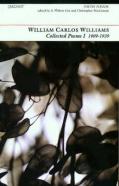
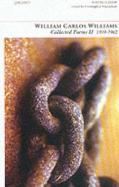 in some cases, the carcanet two-volume collected poems of william carlos williams are essentially identical to the u.s. new directions editions but with more interesting covers...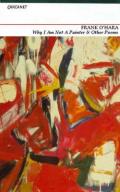
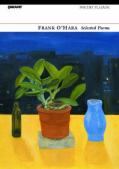 in other cases though, you get an edition unlike anything in the u.s., for example these two distinct selected frank o'hara books. published not quite two years apart, the thinner earlier volume apparently contains o'hara's semi-serious poetics statement "personism: a manifesto," while the more recent volume offers a slightly more generous selection (180 some pages as opposed to 90 some). this latter appears to be the same as the selected that don allen edited for knopf back in the 1970s (and which carcanet had printed earlier too). question is, aside from the cooler looking covers, what are they thinking with these marginally different editions?

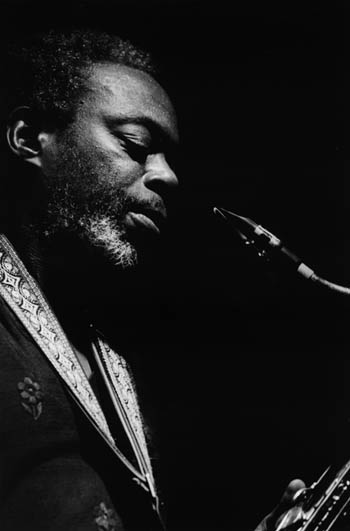 when i started getting serious about free jazz in my last two years of college, i had a radio show on the crappy campus station and eventually played exclusively my new discoveries in the genre. fortunately what the station lacked in audience it made up for in decent vinyl, and i quickly learned that anything on arista/freedom was likely to be worth a listen: braxton, art ensemble's
  composition "the garden of souls." it clocks in at just under 14 minutes long, the first 8 or so minutes of which are taken up with an extended coleman alto solo, whcih a little after 5 minutes double-times up the tempo and cooks along at that pace for another 4 minutes before simmering back down. at 9:54 this low foghorn rolls in outta nowhere! rod and i both stopped in mid-conversation and stared at the stereo in silence: what the hell was that? redman frequently vocalized while playing, he sang or hummed or shouted amidst, beneath or overtop the saxophone soundings to create wonderful dissonant and emotive effects. and let's not forget to his explorations on the musette -- one of few contemporaries (aside from giuseppi logan and bill cole i suppose?) to take up the invitation of asian reed instruments in any serious way.
 rounding out my holiday weekend of film and about-to-close art shows, i trekked over to
  anyway this was a terrific exhibit (it's up through this sunday), with something like 80 of his works on display, mostly from the 1920s i'd say though some into the 1930s. i have to say a number of things that struck me about klee: first,


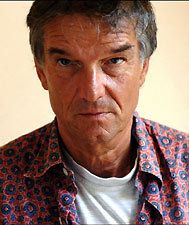 benoît jacquot's
  refusing to let ernesto spoil the last day of my summer, i went down to the national gallery to see martina kudlácek's 2005 documentary
  readers in DC have one more chance to see this at the NGA (sunday at 2pm), and it's worth it not only for pure info and background. there are moments when it's quite nicely shot too: one scene in particular where kudlácek's footage of a carnival ride litlerally morphs into pure brushstrokes. there are some moments too where the narrative wanders and makes the film feel like it was really only a 70-minute film that was stretched to make it 97 minutes (particularly when we follow gerard malanga into queens to visit his father's crypt). other moments tho were quite a joy: malanga discovering footage of menken and warhol shooting footage of each other on a rooftop and him and warhol making silkscreens in warhol's studio in late 1963 for example; kenneth anger talking about how marie and her husband used to get drunk and spar with each other all weekend; brakhage describing menken's discovery of the hypnogagic vision; peter kubelka describing the poetics of the bolex camera; and jonas mekas singing and translating the lithuanian children's song that menken sang to him once.
 i then decided i'd better see the "anselm kiefer: heaven and earth"
  thematically he's also so... obvious. darkness, big darkness, massive inhumanity, a bit of humor (dark of course). really leaves so little to the imagination. even when kiefer gets sculptural and puts affixes objects into the flat dimensions of the canvas -- like


 followed by