the inimitable george f. will published a rather bizarre
column in the
washington post yesterday marking the twenty-fifth anniversary of the CDC's first (june 5, 1981) announcement of fatalities due to what would come to be known as AIDS. with little compassion, will breezes through the evolution of the disease to an assessment of how he thinks we got to where we are and how we could have done more. it has of course given him a new opportunity to talk about the human rectum, as
some bloggers have pointed out. but it's will's politics of rectums that merits closer consideration, so let's walk through it.
1) how, according to will, we got here: "In 1980s America, the enabling context included a gay community feeling more assertive and emancipated, and IV drug users sharing needles....AIDS arrived in America in the wake of the Salk vaccine, which, by swiftly defeating polio, gave Americans a misleading paradigm of how progress is made in public health." in other words, we were all lulled into a sense of complacency in thinking AIDS could be fought with a vaccine. this is of course sheer anachronism: AZT as a mere treatment drug was only approved in 1987, drug cocktails did not gain prominence until the mid-1990s, and we still do not have an HIV/AIDS vaccine today.
2) how, according to will, how we could have done more: "The U.S. epidemic, which through 2004 had killed 530,000, could have been greatly contained by intense campaigns to modify sexual and drug-use behavior in 25 to 30 neighborhoods from New York and Miami to San Francisco." of course will gives no specifics as to timeframe here, and i'm no expert but this smells fishy to me. so let's go back to 1983 and look at the record.
The number of identified cases is now over 1,400 (with four to five new cases reported every day). Of these victims, 541--or nearly 40 percent--have died. But this mortality figure is misleadingly low. Because the disease is so new, it has not run its full course in the afflicted; the statistics show that within two years after diagnosis, 80 percent have died.
This, too, is misleading, however. The cases being reported and documented by the Centers for Disease Control are only the clearcut, life-threatening ones - which may be but 5 to 10 percent of the total. This means there may be not 1,400 but actually 15,000 to 30,000 cases in the nation. But it also means that these other cases are much milder and therefore much less likely to be fatal. (Sydney H. Schanberg, "A Baffling Epidemic," The New York Times, May 24, 1983, Section A, Page 25)
This is 1983, OK? So I don't see how one could feasibly argue for the success of a containment policy a mere two years after the CDC first confirms fatalities, at which point the CDC is estimating a possible 15-30,000 actual cases.
regardless, will is really less interested in public health or compassion than he is in politics -- a politics of 1) vilifying certain sexual behaviors on moral grounds and 2) defending his beloved ronald reagan's record of silence on the matter. here's how will continues:
But early in the American epidemic, political values impeded public health requirements. Unhelpful messages were sent by slogans designed to democratize the disease -- "AIDS does not discriminate" and "AIDS is an equal opportunity disease."
By 1987, when President Ronald Reagan gave his first speech on the subject, 20,798 Americans had died, and his speech, not surprisingly, did not mention any connection to the gay community. No president considers it part of his job description to tell the country that the human rectum, with its delicate and absorptive lining, makes anal-receptive sexual intercourse dangerous when HIV is prevalent.
get it? first, it's that demon political correctness at work again: "political values impeded public health requirements" and "unhelpful messages were sent by slogans to democratize the disease." second, the gipper is above the soiling of presidential decorum that discussing rectums would entail. (this from the party that 10 years later brought us clinton blowjobs and cum-stained blue dresses!)
i know, this is a little opaque, so let's go back again into the record a bit. almost exactly 19 years that is. to a
washington post column dated june 7, 1987 by one george f. will, called "AIDS: The Real Danger..."
Earnestly, and with applause from journalists, politicians are saying about AIDS: candor, regardless of the cost. But truths are being blurred because they inconvenience a political agenda and shock sensibilities. The agenda is to avoid giving offense to any groups and to avoid the accusation of "discrimination," even when the accusation is unwarranted.
In spite of much talk about the "breakout" into the general heterosexual population, AIDS still is and probably will remain predominantly a disease of homosexuals and intravenous drug users. It will decreasingly afflict educated, information-receptive homosexuals. It already is disproportionately, and will increasingly be, a disease of inner-city blacks and Hispanics.
Blacks and Hispanics, who constitute 11 and 8 percent of the population respectively, are 25 percent and 14 percent of AIDS patients. Those percentages probably will rise because AIDS is a behaviorally based disease and will disproportionately afflict those disadvantaged inner-city classes least able to acquire and act on information. After all, many people are caught in the culture of urban poverty precisely because they have never been given the basic skills of social competence: they do not regulate their behavior well, least of all in conformity with public-health bulletins.
Americans have a technology fixation generally. Regarding health, their thinking is shaped by the polio paradigm, the conquest of disease by Dr. Salk's silver bullet. But America's principal public-health problems flow from foolish behavior regarding eating, drinking, smoking, driving -- and, with AIDS, abuse of the body, especially the rectum.
i won't hold will's inability to predict the future correctly in his second paragraph -- in fact, as it was reported by the CDC in 1994, "Since AIDS was recognized in 1981, the proportion of people contracting the deadly virus from heterosexual sex has increased more than tenfold - from less than 1 percent to almost 10 percent of the total AIDS cases, the CDC said in its annual update. Conversely, the proportion of men getting AIDS from having sex with other men has decreased from 75 percent to 47 percent of all cases" (Anne Rochell, "Heterosexual AIDs rate up sharply," Atlanta Journal and Constitution, March 11, 1994, page A1).
nor will i take him to task for his inherently elitist, classicist and possibly racist assertion that "many people are caught in the culture of urban poverty precisely because they have never been given the basic skills of social competence," which assumes they do not innately possess such skills and cannot obtain them of their own will and volition but instead must be "given" them, presumably by the likes of will himself. nor will i challenge his polio analogy, which he's obviously still trying to get mileage out of today but is just as specious (and really boils down to the classic conservative tenet that people are bad).
no, more immediately relevant is will's claim, here in 1987 and essentially reiterated unchanged 19 years later, is that political correctness and the need "to avoid giving offense to any groups" prevents us from having a frank public discussion of AIDS, from calling it what will obviously thinks it is in 1987 and presumably today: a "gay disease" afflicting ethnic minorities and sexual and moral degenerates. political correctness won't let commentators like will tell us straight up what it all boils down to: abuse of the rectum.
Most journalism about AIDS reflects social and political squeamishness. In addition to an understandable reluctance to discuss certain sexual matters, journalism is infused with liberal values, [sign of the times: you'd never see will putting these two words together today] including abhorrence of "discrimination," which is defined (indiscriminately) to include all invidious distinctions among social groups, particularly those, such as homosexuals, that have a history of being badly treated.
Journalism seems reluctant to clarify that the primary reason for the AIDS epidemic is that the rectum, with its delicate and absorptive lining, is not suited to homosexual uses. [oh but does george discuss the delicate and absorptive lining of the rectum with RELISH or what?] The nation needs unsparing journalism of the sort found in the Chicago Tribune Magazine of April 26:"...81.5 percent of the second cluster of AIDS patients had engaged in the practice called 'fisting,' which causes rectal trauma, in the years before they fell ill. The researchers defined fisting as the insertion of a portion of the hand -- or even the entire fist -- into the anus of another person. The 27 men studied had a median of 120 sexual partners during the year before the onset of symptoms, with one man reporting up to 250 sexual partners in each of the three years before symptoms."
Without here adding details about dildos and enemas, [oh george, please do!] suffice it to say that the data suggest that receptive anal intercourse is the major, if not the only, important exposure by which homosexuals acquire the infection. In many cities, homosexual organizations have effectively taken the lead in distributing information about safe sexual practices. And, of course, not all homosexuals are promiscuous or given to high-risk behavior. However, even some who are not are dismayed by dissemination of information about those who are. And insufficient information about homosexual practices has impeded understanding of the epidemic.
in other words, journalists should just talk more often and more frankly about FISTING! i mean this is the so-called "liberal media" we're talking about, right george? if the "liberal media" would just provide us with sufficient information about sexual acts such as fisting, we could have a more open and honest dialogue about AIDS and AIDS public policy?
of course, this makes no sense. what will is really saying is that if the SCLM would openly and frankly "clarify that the primary reason for the AIDS epidemic is that the rectum, with its delicate and absorptive lining, is not suited to homosexual uses," then we could all publicly and shamelessly practice the discrimination against the ethnic minorities and sexual deviants who are the ultimate cause of all this!
"And, of course," will writes, the "of course" always acting as pseudo-qualifier, the obligatory nod to moderation, compassion and decency that in reality lies in stark contrast with the conservative's
true feelings, "not all homosexuals are promiscuous or given to high-risk behavior," even though will goes right ahead and reinforces such stereotypes anyway.
Of course anyone with AIDS deserves care and compassion. Of course testing is acceptable, if only marginally important, for applicants for marriage licenses and citizenship, and for prisoners. (Many rapes are homosexual rapes in prison.) But while it is politically safe and socially soothing to pretend that AIDS is now a democratic, meaning universal, disease threatening us all equally, that is false.
So is the notion that the most urgent task is to fund research for a vaccine. Of course research should be funded generously, but dollars spent getting addicts off needles and onto methadone will do more good, as will journalism that does not trim the truth to spare our feelings.
right: there is no equal, universal risk (in fact third worlders are now at greater risk than they were then), and funding research for a vaccine is not our most urgent task (fund it generously he says, but if not for a cure then for what?), it's telling people the truth about FISTING that's so vital and urgent!
so the moralism, hypocrisy, sensationalism and fear in such a position are evident enough, but what about the politics? what happened to reagan in all this? recall will's little history lesson from yesterday's column:
By 1987, when President Ronald Reagan gave his first speech on the subject, 20,798 Americans had died, and his speech, not surprisingly, did not mention any connection to the gay community. No president considers it part of his job description to tell the country that the human rectum, with its delicate and absorptive lining, makes anal-receptive sexual intercourse dangerous when HIV is prevalent.
fortunately for us and for god-fearing sex-hating conservatives everywhere, will is all too willing to include this in his own job description. what's more here interesting is how will is defending reagan's silence as a matter of decorum. he says "not surprisingly" reagan's speech "did not mention any connection to the gay community," which i find highly curious. on one level, it's indeed no surprise that reagan would not highlight homosexuals in such a speech, because conservative moralists of all stripes were doing it for him and with a vengeance. while i don't have time to track down what other conservative moralists like bauer, bennett, buchanan, falwell, and robertson have said, william f. buckley for one
proposed, in a march 18, 1986
new york times column, that "Everyone detected with AIDS should be tatooed [sic] in the upper forearm, to protect common-needle users, and on the buttocks, to prevent the victimization of other homosexuals." and why would reagan go against this crowd when they're the ones bankrolling him and his party?
essentially, will is trying to make a virtue out of reagan's
notorious silence with respect to AIDS. but in maintaining a virtuous silence, isn't reagan falling prey to the very political correctness that will decries?
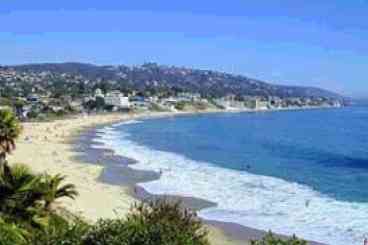 from the home office in capistrano beach, california...
 dinner at the loft, montage resort and spa's casual gourmet restaurant, was quite something. (rooms there start at $420/night). bill and lisa and i shared everything. our three starters were: 1) pan-seared maine diver sea scallops and sherry glazed pork belly garnished with a sweet cream corn and, curiously enough, a few pieces of popcorn; 2) carpaccio of ahi tuna, garnished with coconut curd and lime jelly, and a caper-cilantro salad; and 3) vanilla butter-braised lobster served with cured lemon and ricotta agnolotti in a citrus sauce. the scallops and the tuna were in a close tie for my favorites, but since i'm not generally inclined to go for raw fish i'll give the tuna the edge, it was a really wonderful surprise to me. the lobster was not bad, hardly, it's just the citrus flavor, mild as i was, sort of dominated and i never caught too much vanilla.
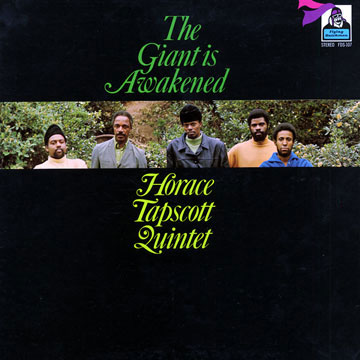 but by far the most stunning thing to hit my stereo upon returning from NYC has been
  tapscott's recordings are horribly underserved by the compact disc market right now.


 i did make a point of being back in time for Kidd Jordan (tnr sax), Joel Futterman (pno), William Parker (bs), and Alvin Fielder (dr) -- and quite a whorl of sound produced by this band as one can imagine. futterman particularly impressed me: i have him on a leader date for a german label that featured jimmy lyons in one of his last performances. futterman is a figure who literally looms large behind the piano (he must be six foot four) and pounds away to create a wonderful ringing din. in fact i've never seen a pianist's hands move so perpendicularly to the keys (and parallel to the run of the keyboard) before: he literally swept his arms sideways along the keyboard. jordan's tenor playing was certainly fiery but a little to unvarying for my taste: he'd hit a certain height in the upper register and stay there, go back down, back up and stay there, etc.
  for sixteen years, so minimal verbal is needed between these guys. nevertheless, there was a sense of unpredictability to the whole performance: ware picked numbers, cued soloists, stopped and started in places and ways that certainly had me constantly guessing and seemed even to have the band guessing too. i have to say that i was not moved to the degree that i was upon first hearing the DSWQ at the visionfestival three years ago, but it was still a command performance. every time he picks up the horn and puts it to his mouth you know you are in the presence of the higher powers. shipp and parker took an amazing duet, and ware gave brown an extended drum solo with no recap. "mikuro's blues" from
  Rob Brown Quartet -- Rob Brown (alto sax), Craig Taborn (pno), William Parker (bs), Gerald Cleaver (dr). brown is one of my fave altos on the scene and he's been busy in the studios, especially for the portuguese clean feed label, on which i've fallen behind and so was eager to hear what he's been up to. this is a formidable group, so much so that brown may have
  actually upstaged himself in putting it together. his compositions were to my ears some of the best of the festival: a medium groove 5/4 piece, a medium-fast out-of-tempo rising disjointed melody, and a slower darker broding kind of piece with just enough brightness coming through the cracks. while the whole band certainly rose to the occasion, taborn really impressed. i've seen him before, in a trio with susie ibarra and jennifer choi at the sackler gallery at the very least, but here he really excelled -- great speed and power, cross-handed work, inside the piano stumming and plucking, and just a touch of electronics to color the proceedings.
 Billy Bang Quintet: Billy Bang (vln), James Zollar (trpt), Andrew Bemkey (pno), Todd Nicholson (bs), Newman Taylor Baker (dr) -- i've seen billy bang on a number of occasions and he's always a joy to watch, but this set was also outstanding. it never struck me as expicitly before (thought perhaps it has subconsciously and i never noticed it) how much bang's recent melodies have an oriental inflection, coming as they do out of his vietnam experience. but quite literally these pizzicato melodies sound very much like they could be coming off a japanese koto-type string instrument. thus no matter how much they may go to and exceeed the outer reaches of the changes, bang's performances always have a strong grounding in melody and derive much of their appeal from this. zollar is a great discovery for me, possessed as he is of a remarkably big brassy tone, and bemkey's lyricism reminded me very much of mccoy tyner's in places.
 Slammin' The Infinite: Steve Swell (tmb), Sabir Mateen (rds), Matthew Heyner (bs), Klaus Kugel (dr), John Blum (pno) -- this is a band with which i had limited prior familiarty, mateen being the only player i knew and who again immediately rose to the occasion and cut through with some blistering playing. i found swell's playing very competant but did not stand out very much for me, clearly a lot of energy going into the playing all the same. blum and heyner made an interesting team: both younger guys both posessed of serious chops, the former nearly flailing away as he attacked the keys and the latter going at the fretboard with both hands like some heavy metal band (the long black hair adding to this image i suppose). blum i thought was perhaps the most inexperienced in terms of his comping cutting too much into the soloist from time to time, as if he's still learning how to show off his chops but and still give enough room and deference to the soloist. most
  impressive of all in this group perhaps tho was kugel (far right), clearly a very european drummer poised perhaps midway between the speed and color of lovens and the power of nilssen-love. i noticed most of all the lightness and quickness of his cymbal work and incredible hand speed. total economy of motion as well, every bit of energy being directed into the music.
 Roscoe Mitchell Quartet: Roscoe Mitchell (rds), Corey Wilkes (trpt), Harrison Bankhead (bs), Vincent Davis (dr) -- you know, there's simply no one else who even approaches the area mitchell continues to explore. as if to say, sit back new yawkers and lemme show y'all how we do it in chiCAHHHgo! and it's not just the incredibly broad tonal range he possesses on soprano and alto or his ability to "deconstruct" melody, to take a line and splinter it into any number of directions. and of course the circular breathing technique he has mastered allows him to do this (splinter and graft) simultaneously for as long as he seemingly wishes. add to all this his fellow players: bankhead, again like billy bang the other night able at once to evoke a roots-music sound that makes his instrument sound like something from another african or asian culture and then also at the same time show a remarkable western virtuosity; davis, so powerful a drummer that his kit literally would not stay on the floor, so frequently did he have to stop playing one drum in order to bring it back closer to him; and wilkes, now let's just say a couple of things here. the generosity, first of all, of mitchell putting a
  young player and student up there on stage as an equal. and secondly, wilkes has the chops to step into that equal footing and, dare i say, upstage the master? i mean, i was thinking the other day about extended brass technique (relative to lewis and dixon) and thinking, since no one's done it to my knowledge before, it must not be possible to circular breathe on a brass instrument. no sooner do i think this than wilkes goes and does it. and what else does he do? he pulls a kirk. that's right, he plays two trumptets (or rather, a trumpet and flugelhorn) simultaneously. trust me, wilkes is going places.
 faculties for By Any Means: Charles Gayle (tnr sax), William Parker (bs), Rashied Ali (dr). earlier in the evening kevin and i say gayle and i spoke to him for a minute, asked if he was going to play tenor or piano or a little bit of both or wait till he got on stage to decide, and he said "no, no tenor!" apparently he switched to alto two years or so, i asked him why and he said something like the tenor had gotten "too hot" and he needed to put it down and try something else for a change. indeed, with gayle's reputation as the most ferocious tenor on the block -- one that belies his very sweet and personable demeanor -- i could not imagine what he was going to do on alto unless it would literally melt or crumble away in his hands. well, this trio turned in perhaps the most moving performance of the festival. a lot of the biting and barking fire that gayle used to put into the tenor is still there on the alto, but i think the fact that it's a smaller horn has forced him to find or rediscover, believe it or not, a lyricism. the second of three pieces, a ballad, was so profoundly filled with the cries of human spirit, the kind that only coleman evokes on "lonely woman" and dolphy evokes on "god bless the child." that and also just to watch the two other masters, parker and ali, was worth the price of the whole weekend.
 Grachan Moncur III Quartet w/special guests -- this was an absolute treat. three tunes in the set: a medium-slow loping groove of a tune co-authored by moncur and the late great jackie mclean, and then two covers of classic material from the miles davis quintets, "footprints" from miles smiles and (at the audience's urgings for more music) "so what" from kind of blue. the first tune just simmered and smouldered along, with noriko kamo's monk-like comping and soloing on piano interplaying marvelously with moncur and khan jamal's vibes. moncur was the epitome of class and restraint (golf shirt and cap to boot). jamal's fierce swing countered his seemingly stoic demeanor and appearance (shaven head and face), with only some mic trouble on the high end of his vibraphone marring this performance. byard lancaster did not make it unfortunately, but a guitarist whose name i did not catch filled in with remarkably clean and dexterous lines. rhythm section -- calvin hill (b), richard pearson (dr) -- grooved and swung hard but with, again, a kind of classic restraint. this set woulda sat comfortably at blues alley or birdland, or on a blue note record. moncur seemed to have embouchure trouble on the last piece, and the group as a whole seemed to have a hard time knowing how to end the pieces, the flipside of this of course being that they coulda played all night. and none of us woulda minded one bit.
 Warren Smith Ensemble -- i've seen smith before, at sangha cafe in takoma park with bill cole i think, and this six piece gave him a chance to air his own compositions. personnel changes here too, all of which i did not catch, but you had andrew lamb (tenor sax), roy campbell (trpt), jaribu shahid (b), one guy playing french horn and another playing a bass trombone (never seen or heard one of these, looks like a regular trombone except the part behind the player's left shoulder doubles back on itself the same way the top of a bari sax does). two pieces in this set, the first being rather restrained free-tempo piece that never really got off the ground for me (seemed to be a lot of talking b/w band members during, stuff they maybe coulda worked out in advance?), but the second piece was quite something: "a gift from william" [parker]. seems smith has been babysitting a balafon at william's request (taking up too much space in his and patricia's place), so he wrote a piece featuring the balafon (african xylophone with wood keys and gourd resonators). smith stated the melody on balafon to open and close, the band (particularly campbell and lamb) building to a great crescendo groove.
 Sam Rivers Trio -- again, this man is 82 years old. true, his tenor playing is not quite as fiery as it was say, i dunno, 30 years ago. but he's still spry and wry and full of invention. this is his working trio (also rhythm section of the rivbea orchestra), and a nimble and fleet rhythm section this is. they took opportunities to flex their muscle on other instruments as well -- doug mathews (bass, bass clarinet) and anthony cole (percussion, tenor sax, piano) -- like their leader, i mean, who else in the whole of modern jazz has been such a virtuoso on such different instruments (tenor, soprano, flute and piano) as rivers? tho i kinda wasn't paying full attention during their reed trio (sorry, this is after 4 straight hours of live music), well cole plays a mean piano, like rivers turning in a masterful ballad performance on piano.
  but coming back for the last set of the night was quite something: Bill Dixon (trpt), George Lewis (tmb, elec) + Videosonic Projections. lewis of course has been the leading american pioneer of extended trombone technique now for probably 30 years (too bad he couldn't have share the stage with his british counterpart paul rutherford!) and likewise dixon who having formed the ny contemporary five with tchicai and shepp and then played on the cecil taylor blue notes has continued charting his own way into extended trumpet technique but probably getting even less recognition than lewis (which is to say not much). though dimming the stage lights and having no rhythm instruments to keep things moving made this a difficult performance to attend to at the end of the night -- actually had this been the 8pm show and the coltrane tribute band the late show, that woulda totally worked -- nevertheless this was utterly fascinating stuff. not only can these guys coax every bleep, blurp, dooweeet thhhhwip and brwawwwp out of their respective horns, but filter it all through various live electronic processing
  and you have an amazing palette from which to work. particularly, dixon's half-lip low tones evoke for me the 12-foot steel trumptets of tibetan buddhist monks, while his breathy thwips when caught in a delay loop could easily make the rhythm track for an piece of electronica dance music. there was a video projection as well as some found speech loops interspersed but they never really integrated into the performance for me. and like i said it was all a bit static for 11pm -- fun to think of what bassist and drummer you could add to make this a killer quartet -- but in terms of extended brass technique this stuff was primo. (like it makes no sense to me amplify and process a saxophone for example but makes complete sense to me for a brass instrument.)
 this summer marks 30 years since my parents, sister and i took our 22-1/2-foot dodge jamboree motorhome (something like the one depicted except ours had a dark brown stripe) on a 7-1/2-week trip across the country: from cleveland straight to saint louis to visit my cousins (on dad's side of the family) and then through the middle of the country to and into the southwest, all the way up the west coast from los angeles to seattle, through idaho to montana, wyoming, and then all the way back through the midwest along I-90. (i seem to recall we managed to buy gas at times for around 50 cents a gallon.)


 quotes and links follow, but the upshot is:
 an average middle-class, white-collar austrian family is depicted in a typical day from three successive years. the last day, though, is anything but typical. problem is, they lead incredibly boring, mundane lives. they don't really live: they do stuff. feet go out of bed and into slippers, teeth get brushed, meals are prepared and eaten unceremoniously, work and school are attended. and so on the day of the third year we are shown, the family carries out their decision to put an end to it all -- for good. they sell the car, withdraw all their money from the bank, tell inquirers that they are emigrating to australia (hence the film's title), write a note to the in-laws, prepare one last meal and proceed to destroy all of their possessions before swallowing poison.
 i guess part of why i changed my feelings about the film is how the facticity makes it all literal while fictionality makes it too ironic? i'm not altogether sure how strongly i would recommend the film because it is rather painstaking -- unlike the majesterial deliberateness of bela tarr in "the werckmeister harmonies," "the seventh continent" borders on studied tedium. (in this sense it's closer to "the brown bunny" but without the blowjob.) but nevertheless i'll certainly check out the other two films in haneke's "glaciation trilogy" ("benny's video" and "71 fragments of a chronology of chance," also released on DVD from kino last month). there's also an
  contrary to my previous indication, there will be no post on "rightwing apologetic, part two" focusing on the defenses of the indefensible statements by the author of such books as
  better yet, go straight to the
  also at the american prospect is a four-part essay by john halpin and ruy teixeira one "The Politics of Definition," touted as "a path-breaking and challenging new study on how progressives and Democrats can close the 'identity gap.'" i was not too taken with teixeira's co-authored
 so when i found a copy of